 I’ve supported hundreds of clients through the maze of modern nutrition. I’ve seen the confusion, the burnout, the decision fatigue that comes from trying to do it all “right.”
I’ve also lived it.
I’ve been vegan. I’ve been pseudo-vegan. I’ve eaten clean, raw, high-vibe, high-protein, grain-free, gluten-free, and, yes, once upon a time, tofu on toast.
These days, what’s most true is this: it’s noisy out there. And the food conversation is filled with too many rules and not enough wisdom.
Everyone’s asserting what they think is best. And while much of it is well-intentioned, very little of it addresses the deeper issue: We are biologically overwhelmed and environmentally outpaced. And the gut is where it’s showing up first.
The Mitochondria Moment
After nearly 15 years of eating vegan, by choice, by alignment, and by what felt best at the time, I was told, through a form of muscle testing I trust, that my mitochondria were struggling. Brain. Heart. Skeletal muscle. The message was clear: my cellular engines were running low.
The suggestion? Eat animal protein.
I didn’t jump in carelessly. But I also didn’t ignore it.
So I began. I added meat back in slowly, intentionally, as a therapeutic measure.
And while it tasted fine, it didn’t feel fine. Not in my gut. Not in my energy. Not in the deeper intelligence I’ve come to know and trust. My digestion slowed. My energy dropped. And somewhere in me, I knew: This doesn’t feel quite right for me.
Then I heard triple-board certified doctor Zach Bush say…
“Eat in ways that nourish the microbiome.”
And that, that landed.
Because it wasn’t just a nutritional opinion. It was a systems-level truth. A reset point. A way to zoom out from protein wars and macro arguments and ask something better:
What supports life?
Nourishing the microbiome isn’t a trend or a rule or a moral stance. It’s foundational.
It’s where immunity begins. Where inflammation resolves. Where cognition, mood, balance, and metabolism originate. It’s also how we respond to the rising tide of environmental toxins, stressors, and gut disruptors that none of us are exempt from.
If toxins are damaging the gut, and they are, then feeding life back into the gut becomes vital.
The Soil–Gut Connection
What’s more, the more I understand the gut (and I’ve studied gut health more than anything else in my career), the more I see how deeply it mirrors the soil.
Healthy soil. Healthy food. Healthy gut. Healthy mind.
It’s one ecosystem, “As above, so below.”
A depleted field creates depleted food, which creates a depleted microbiome, which creates a depleted human. It’s all connected.
What I Know Now
There is no one perfect diet. But there is a perfect direction: toward life. Toward nourishment. Toward repair. Toward microbial diversity.
I believe deeply in the wisdom of plants.
I believe animal products, when regeneratively raised and intentionally used, can be supportive for some, and even therapeutic.
I believe healing isn’t ideological; it’s rooted in biology, context, and lived experience.
And I believe we heal when we nourish our inner ecosystem, our microbiome, with the richness and diversity it needs to thrive.
With farmers markets in full swing again, I find myself picking up plants I’ve never tried, each one like a new microbial friend for my gut, feeding the biodiversity that keeps me steady in a not-so-clean world.
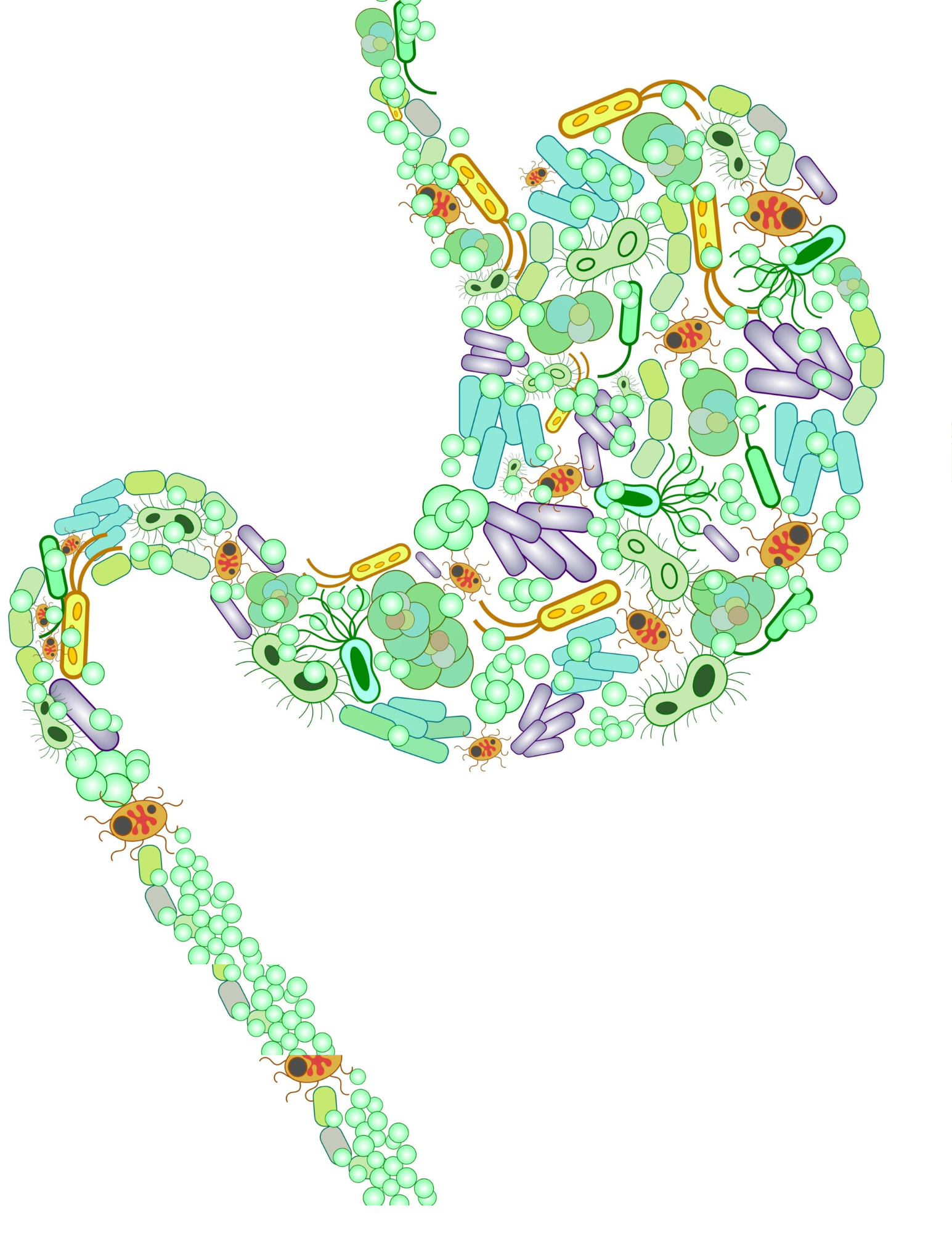
Because diversity really is the point. Our inner ecosystem thrives on it, ideally containing 20,000 to 30,000 different bacterial species. The more diverse our microbiome, the more resilient we become, metabolically, emotionally, and immunologically.
This clarity is my compass.
So What Am I Eating Now?
These days, I lean plant-first. I avoid gluten because of what I’ve learned about its relationship to glyphosate and gut permeability. When we consume foods sprayed with glyphosate, like most conventional wheat, it can disrupt our gut’s tight junctions, letting things leak into the bloodstream that were never meant to get through.
I incorporate occasional animal foods, but more as targeted support than as dietary staples.
Here are five meals I’ve loved lately. Not prescriptions, just possibilities to consider:
Gut-Nourishing Simplicity
- Warm bowl of lentils, quinoa, sautéed dandelion greens, garlic, and olive oil
- Side of fermented kimchi (or vegetables)
- Herbal tea with lemon balm and ginger
Microbiome Rainbow
- Big salad: arugula, cabbage, cucumber, radish, sprouts, avocado
- Olive oil + apple cider vinegar dressing
- Lentil sprouts + hemp hearts
- Optional: 3 oz of wild-caught sardines, salmon, or smoked trout
Regenerative Bowl
- Wild rice (or quinoa, or millet) with roasted squash, kale, and chickpeas
- Coconut yogurt, cumin, and cilantro drizzle
- Side of fermented sauerkraut
Earth-to-Table
- Garden soup with nettles, parsley, leeks, zucchini, and fresh herbs
- Flaxseed crackers with hummus
- Optional: poached pasture-raised egg
Rooted & Restorative
- Buckwheat noodles in sesame oil, scallions, and broccoli
- Crushed nori + sesame seeds
- Ginger-lemon kombucha
What Makes Sense for My Body Now
I eat like someone who’s deep in relationship with her body, curious, adaptive, attuned, and reverent.
If you’re in the middle of your own food crossroads, I hope this gives you permission to tune out the noise and tune in to what actually nourishes you.
You’re not doing it wrong. You’re learning to listen.
And that’s not a detour, it’s the path.
In the end, I’m not just feeding my body. I’m choosing coherence, between what I know, what I feel, and what the Earth is asking of us now.