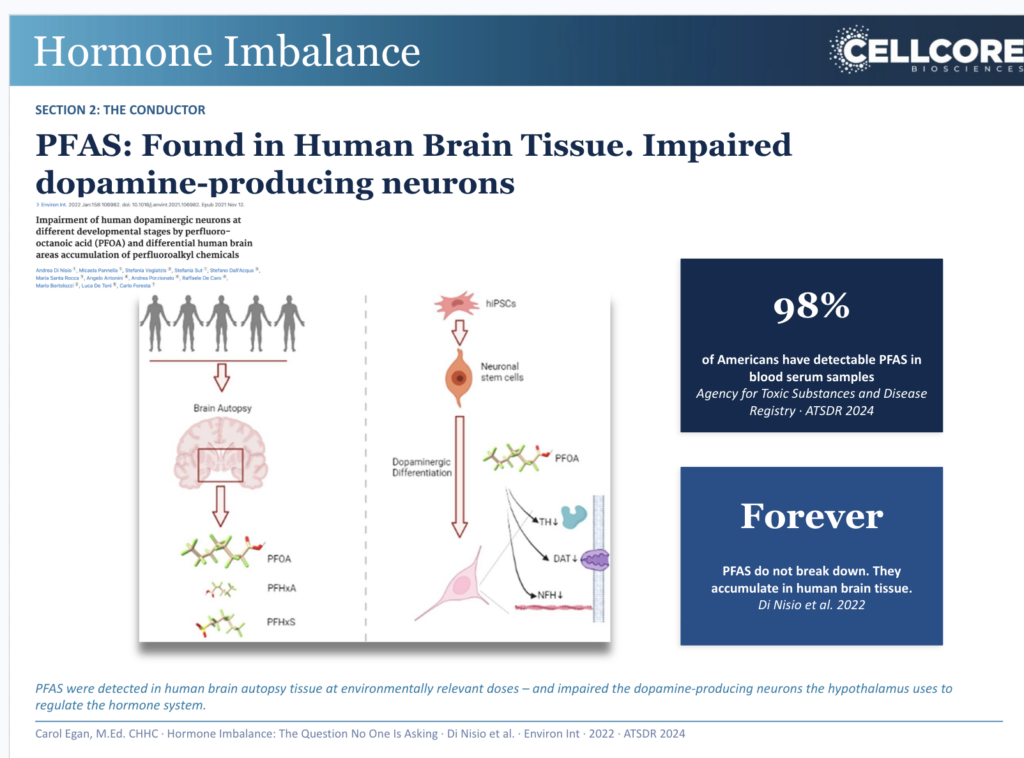
Last week I presented research at CellCore’s ECO Conference (Exponential Clinical Outcomes) on something most people still do not realize: PFAS—per- and polyfluoroalkyl substances—accumulate in human tissue, including the human brain.
This is not theoretical. Human autopsy studies have documented PFAS compounds in the hypothalamus and pituitary gland: the command centers regulating hormones, metabolism, stress response, reproduction, thyroid signaling, and neurological function. Research also shows PFAS exposure can impair dopamine-producing neurons, which affect pathways tied to motivation, mood regulation, reward processing, and cognitive resilience.
Ninety-eight percent of Americans have detectable PFAS in their blood serum. These chemicals are called “forever chemicals” because they persist for years in the body and environment. Exposure accumulates over time, largely through drinking water, food systems, consumer products, and industrial contamination.
And today, EPA Administrator Lee Zeldin announced the agency is rescinding drinking water protections on four PFAS compounds: GenX, PFBS, PFHxS, and PFNA. The EPA will maintain current limits on PFOA and PFOS at 4 parts per trillion but extend compliance deadlines from 2029 to 2031. For the compounds without current standards, the agency stated it will restart the regulatory process.
This means continued exposure while reevaluation takes place.
Here is what deeply concerns me: we are simultaneously witnessing rising rates of fatigue, mood and mental health disorders, motivational dysfunction, endocrine disruption, thyroid dysfunction, infertility, cognitive decline, and nervous system dysregulation while research continues to demonstrate that PFAS compounds interfere with neurological, mitochondrial, endocrine, and immune function.
This does not mean every case of depression, exhaustion, or hormone imbalance is caused by PFAS. But it is no longer scientifically responsible to treat environmental toxicants as peripheral to modern chronic disease.
The brain, endocrine system, immune system, and mitochondria are not separate silos. They are one integrated network. When chemicals capable of disrupting dopamine signaling, hormone regulation, inflammatory pathways, and cellular energy production accumulate in human tissue over decades, downstream consequences should not surprise us.
Test your water. Understand your exposure sources. Advocate for stronger protections at the state level. And seriously consider investing in a high-quality water distiller, such as My Pure Water. Distillation remains one of the most effective methods for removing PFAS and other persistent environmental contaminants from drinking water. Environmental toxicology is no longer a fringe discussion; it is one of the defining public health conversations of our time.
None of us consented to drinking neuroendocrine-disrupting chemicals in our water.