Carol Egan

  • About
  • Detox Tools
  • Speaking
  • Coaching
  • Results
  • Articles
  • Resources
  • Shop
  • Contact

A Practice for Nervous System Ease

By cegan

I want to share something with you that’s been helping me settle in my body, really settle, in ways that have remained elusive to me even with everything I know about healing.

It’s called TTAT (Tapas Acupressure Technique), and it comes from somatic trauma work, which treats trauma where it’s actually stored: in the body. It works directly with the nervous system to clear what talk therapy can’t reach, the somatic imprint of trauma living in your tissues, by helping your body feel safe enough to release what it’s been holding. If you’ve ever felt like you never quite believe it’s safe to relax, where you can’t ever fully let your guard down because some part of you is always braced for what’s coming next, TTAT might be for you too.

It’s simple. Almost too simple. But that’s exactly why it works.

The Practice
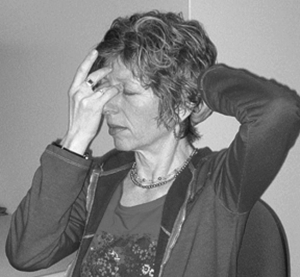
Sit or stand, whatever feels right. You don’t need to be anywhere special.

Take one hand and place your thumb and ring finger at the inner corners of your eyebrows right where they meet the bridge of your nose. Your middle finger goes on your forehead, just above where your brows are.

Your other hand goes on the back of your head, where your skull meets your neck. You’ll feel a little ridge there.

The pressure? Light. Like you’re holding something delicate. No pressing, just resting.

Now bring to mind whatever’s sitting heavy in you. Don’t tell a story about it; just name it. “This fear.” “This tightness.” “What happened yesterday.” Whatever it is, just be aware of it.

Hold the position and let your body do what it needs to. You might sigh. You might yawn. Your breath might drop lower. You might feel warmth or softness somewhere. You might cry a little.

That’s the clearing happening.

Stay there for 30 seconds to a minute, maybe longer. When something shifts, you’ll feel it: a sigh, a yawn, a settling, maybe even a tear or two. That’s when to stop.

Take a breath. Notice what’s different.

That’s it.

You’ve actually released stored energy.

What’s Actually Happening

When you hold these points, you’re calming your amygdala (your brain’s threat detector) and activating your vagus nerve (which controls your body’s ability to rest, restore, and digest). Your nervous system shifts out of survival, fight-or-flight mode and into a restorative state where healing can actually happen.

Letting go with Ease

This isn’t about fixing yourself or working harder at healing. It’s about giving your body permission to let go of what it’s been holding, and likely for too long.

You can do this practice once a day, or whenever you feel wound up, or right before sleep. Do it when it feels right.

The more you do it, the more your nervous system learns: I can release this. It’s safe to let go. Ease is possible. I don’t have to carry it any longer.

Be patient with yourself. Some days the shift is subtle. Some days it’s big. Both matter, and over time, both change your life.

Your body adapted brilliantly to all the stressors you’ve experienced. But for real healing to happen, it needs to feel safe to return to rest and restore mode. That’s where the magic is, learning to live with ease.

Love it? Share it!

  • Share on Facebook (Opens in new window) Facebook
  • Share on X (Opens in new window) X
  • Share on Pinterest (Opens in new window) Pinterest
  • Share on LinkedIn (Opens in new window) LinkedIn
  • Share on Tumblr (Opens in new window) Tumblr
  • Share on Pocket (Opens in new window) Pocket
  • Share on Reddit (Opens in new window) Reddit
  • Print (Opens in new window) Print
  • Email a link to a friend (Opens in new window) Email

Filed Under: Uncategorized

Christmas Poem by Mary Oliver

By cegan

A beautiful, bright globular cluster in space.Christmas Poem by Mary Oliver

Says a country legend told every year:
Go to the barn on Christmas Eve and see
what the creatures do as that long night tips over.
Down on their knees they will go, the fire
of an old memory whistling through their minds!

[So] I went. Wrapped to my eyes against the cold
I creaked back the barn door and peered in.
From town the church bells spilled their midnight music,
and the beasts listened –
yet they lay in their stalls like stone.

Oh the heretics!
Not to remember Bethlehem,
or the star as bright as a sun,
or the child born on a bed of straw!
To know only of the dissolving Now!

Still they drowsed on –
citizens of the pure, the physical world,
they loomed in the dark: powerful
of body, peaceful of mind,
innocent of history.

Brothers! I whispered. It is Christmas!
And you are no heretics, but a miracle,
immaculate still as when you thundered forth
on the morning of creation!
As for Bethlehem, that blazing star

still sailed the dark, but only looked for me.
Caught in its light, listening again to its story,
I curled against some sleepy beast, who nuzzled
my hair as though I were a child, and warmed me
the best it could all night.

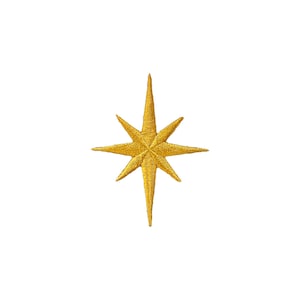
Yellow Gold Nativity Star, Star of Bethlehem, 2 sizes, Embroidered, Iron on Patch


Love it? Share it!

  • Share on Facebook (Opens in new window) Facebook
  • Share on X (Opens in new window) X
  • Share on Pinterest (Opens in new window) Pinterest
  • Share on LinkedIn (Opens in new window) LinkedIn
  • Share on Tumblr (Opens in new window) Tumblr
  • Share on Pocket (Opens in new window) Pocket
  • Share on Reddit (Opens in new window) Reddit
  • Print (Opens in new window) Print
  • Email a link to a friend (Opens in new window) Email

Filed Under: Uncategorized

A Christmas Blessing by John O’Donohue

By cegan

a lone tree stands in a snowy fieldA Christmas Blessing by John O’Donohue

May the Angels in their beauty bless you.
May they turn toward you streams of blessing.

May the Angel of Awakening stir your heart
To come alive to the eternal within you,
To all the invitations that quietly surround you.

May the Angel of Healing turn your wounds
Into sources of refreshment.

May the Angel of the Imagination enable you
To stand on the true thresholds,
At ease with your ambivalence
And drawn in new direction
Through the glow of your contradictions.

May the Angel of Compassion open your eyes
To the unseen suffering around you.

May the Angel of Wildness disturb the places
Where your life is domesticated and safe,
Take you to the territories of true otherness
Where all that is awkward in you
Can fall into its own rhythm.

May the Angel of Eros introduce you
To the beauty of your senses
To celebrate your inheritance
As a temple of the holy spirit.

May the Angel of Justice disturb you
To take the side of the poor and the wronged.

May the Angel of Encouragement confirm you
In worth and self-respect,
That you may live with the dignity
That presides in your soul.

May the Angel of Death arrive only
When your life is complete
And you have brought every given gift
To the threshold where its infinity can shine.

May all the Angels be your sheltering
and joyful guardians.

The Triskele: An Ancient and Enduring Symbol

Love it? Share it!

  • Share on Facebook (Opens in new window) Facebook
  • Share on X (Opens in new window) X
  • Share on Pinterest (Opens in new window) Pinterest
  • Share on LinkedIn (Opens in new window) LinkedIn
  • Share on Tumblr (Opens in new window) Tumblr
  • Share on Pocket (Opens in new window) Pocket
  • Share on Reddit (Opens in new window) Reddit
  • Print (Opens in new window) Print
  • Email a link to a friend (Opens in new window) Email

Filed Under: Uncategorized

Listening to Your Body’s No

By cegan

I was not taught healthy boundaries as a child. Were you? The absence of this skill can cause all sorts of havoc in our lives—in our relationships, our health, our peace of mind, and literally every area of life. So I’ve been practicing setting healthy boundaries for some time now, and one of my favorite quotes always shows up when I contemplate things: “How I do anything is how I do everything.” I could feel how off I felt if I said yes when I really meant no.

This past week I set a boundary that I’ve long needed to set. When I finally said no out loud, I could feel a ding in my gut that resounded with a clear, unmistakable yes: “This feels right. This feels good. Nothing more needed. This no is necessary.”

When I ignore my body’s cues in any area, I pay for it in every way–physically, mentally, emotionally, and spiritually. We can’t be in integrity in one area and out of integrity in another. Whole body healing doesn’t work that way.

With the week before Christmas here, and all the pressure that comes with it, now is the perfect time to get clear on what your yes’s and no’s actually feel like in your body. In Human Design, this is called your authority, the way your body speaks truth to you before your mind has time to talk you out of it.

Here’s what I’m working with this week.

Mind

“Daring to set boundaries is about having the courage to love ourselves, even when we risk disappointing others.” ~Brené Brown

I can literally feel how much clearer my thinking is when I listen to my body’s cues. When I say yes but mean no, my mind can fill up with resentment, excuses, and doubt. The minute I set a boundary, this boundary, confusion stopped. My mind felt clear again. Very clear.

If we don’t set limits, some people won’t either. It’s not their job to guess what we need—it’s ours to say it. That’s why boundaries are healthy and necessary. They protect what’s ours to protect: our energy, our peace, our ability to show up empowered, clear, and strong.

Boundaries aren’t selfish, as many of us have been taught. They’re maturity and clarity– and maturity and clarity start with listening to what our body knows is best for us. We can’t give what we don’t have. We can’t pour from any empty cup.

Body

My body tells me the truth. Yours tells you, too. For me, my throat tightens and my gut sort of recoils when I ignore my no and say yes instead. A heaviness takes over when I give more than I’m capable of giving.

“In order to change, people need to become aware of their sensations and the way that their bodies interact with the world around them.” ~Bessel van der Kolk

This week I felt that deep, super clear gut-level yes rise up–my sacral authority saying “enough.” I heeded its communication. I spoke my truth, and it’s crazy how fast the tide of relief came to me. I could literally feel my body sigh.

Boundaries aren’t just mental decisions, as some would have us believe. They’re actually more physical than mental. Our body knows when we’re out of alignment, and it will keep sending us signals until we pay attention. Ignoring these signals doesn’t affect just how we feel physically, they create a ripple effect of mental confusion and spiritual disconnection.

This is holistic health in its finest expression: Our body speaks to us and we actually listen.

Spirit

Setting this boundary reminded me that taking care of me isn’t selfish. It’s healthy. Vital. Necessary. When I give more than I can give, when I allow others to drain me, I lose touch with myself and what I need. How can I be my best self, how can I bring forth my highest expression of self, if I allow others to take from me what I’m not capable of giving? Boundaries help us notice when we’re giving more than we can.

“You do not have to be good. You do not have to walk on your knees for a hundred miles through the desert, repenting. You only have to let the soft animal of your body love what it loves.” ~Mary Oliver

Creating healthy boundaries that feel good to me honors what feels best and right for me.

Boundaries are an act of self-love. Boundaries are spiritual practice in action.

I’ll keep practicing this. You keep practicing too. We’re learning together.

Love it? Share it!

  • Share on Facebook (Opens in new window) Facebook
  • Share on X (Opens in new window) X
  • Share on Pinterest (Opens in new window) Pinterest
  • Share on LinkedIn (Opens in new window) LinkedIn
  • Share on Tumblr (Opens in new window) Tumblr
  • Share on Pocket (Opens in new window) Pocket
  • Share on Reddit (Opens in new window) Reddit
  • Print (Opens in new window) Print
  • Email a link to a friend (Opens in new window) Email

Filed Under: Uncategorized

Why You’re Still Tired

By cegan

She sat across from me, hands wrapped around a mug of tea she wasn’t drinking. Dark circles. Shoulders slumped. The look of someone fighting a battle she was starting to think she couldn’t win.

“I can get through work,” she said. “But that’s it. By the time I get home, I have nothing left. I snap at my kids. I can’t decide what to eat for dinner. I go to bed praying tomorrow I’ll feel different, and I never do.”

Her doctor had run the tests. Thyroid normal. Blood work fine. “You’re healthy,” they told her.

So she did what everyone desperate to feel better does. She started taking B vitamins and adaptogens. Cleaned up her diet. No sugar, no gluten, no dairy. She followed every rule the IG influencers told her to do.

And she felt worse.

When I asked her what exhaustion felt like in her body, she stared at the wall for a long time.

“I don’t know anymore,” as her eyes welled up with tears. “I just know I’m not me.”

When Exhaustion Becomes Disconnection

That sentence haunts me because I hear versions of it constantly. Heck, I’ve lived it… and not just “I’m tired” but “I’ve lost myself.” Not just fatigue but a fracture between who they know themselves to be and who they’ve become.

If you’ve felt that gap, you’ve probably blamed yourself. Wondered if you’re lazy. Wondered what everyone else figured out that you missed.

You haven’t missed anything. Your body is dealing with more than one problem. That’s why single-fix solutions keep failing.

What’s Actually Happening Inside Your Cells

Every cell contains tiny power plants called mitochondria. They convert food and oxygen into ATP—the energy that runs everything. Your thoughts, your heartbeat, your ability to function. Everything. Without adequate oxygen reaching your cells, that conversion stalls no matter what else you do.

When those power plants struggle, you struggle. Brain fog. Low mood. Weak immunity. That feeling of wading through knee-deep mud to accomplish simple, ordinary tasks.

Most supplements target one part of this system. A B vitamin here. Magnesium there. And if you only had one problem, that might work.

But most people running on empty have several problems stacked together.

Cells aren’t getting adequate oxygen. The gut is inflamed, so nutrients leak out before reaching cells. Cell membranes have lost their electrical charge, so nutrients can’t enter. The energy cycle is missing fuel. Toxins block electron flow. Trace minerals are depleted, leaving enzymes unable to function.

One supplement cannot fix all of that. One mechanic cannot fix a car with a dead battery and an empty tank and a blown transmission, because they’re not all his expertise.

Why HydrOxygen Works Differently

HydrOxygen addresses the full picture.

The formula itself delivers bioavailable oxygen directly to your cells, supporting the very thing your mitochondria need most to produce ATP. Jerusalem artichoke repairs the gut lining so nutrients absorb. Sea minerals restore cellular electrical charge so nutrients can enter. Magnesium malate fuels the energy cycle and activates the enzyme that produces ATP. MSM provides sulfur for glutathione, the antioxidant that keeps mitochondria from burning out. Fulvic and humic acids move electrons through the respiratory chain and clear toxins blocking the pathway. Marine algae delivers seventy-two trace minerals so enzymes can function.

Six problems. Addressed simultaneously.

What Happens When Your Cells Get What They Need

That client? Three weeks in she noticed a shift, though she said she felt it with just one dose. She started making weekend plans again. She woke up wanting to get out of bed. Her mind felt sharper. One morning she caught herself humming while cooking—something that hadn’t happened in years.

But the change that mattered most to me wasn’t just the increased energy. She felt like herself again. She could hear her body. The connection came back.

I think that’s what we all really want when we say we want more energy. We want to come home to ourselves.

You cannot get there throwing one supplement at a time at a five-layer problem. You get there by giving your cells bioavailable oxygen, gut repair, electrical charge, mitochondrial fuel, antioxidant protection, electron transport support, and trace mineral cofactors together, to get this level of results.

If you’ve tried everything and nothing has worked over the long haul, the problem was never you. The problem was addressing one facet of support, when your body needs all six.

HydrOxygen is where I tell people to start.

Love it? Share it!

  • Share on Facebook (Opens in new window) Facebook
  • Share on X (Opens in new window) X
  • Share on Pinterest (Opens in new window) Pinterest
  • Share on LinkedIn (Opens in new window) LinkedIn
  • Share on Tumblr (Opens in new window) Tumblr
  • Share on Pocket (Opens in new window) Pocket
  • Share on Reddit (Opens in new window) Reddit
  • Print (Opens in new window) Print
  • Email a link to a friend (Opens in new window) Email

Filed Under: Uncategorized

Human Flourishing: Why Mind, Body, Spirit Wellness Is the Path to Your One Wild and Precious Life

By cegan

“Tell me, what is it you plan to do with your one wild and precious life?” — Mary Oliver

The Checklist Life

There is a blessing that comes with getting older: the recognition that living a checklist life is empty and meaningless if we don’t have context for why we do what we do.

Got to the gym. Check. Ate the right meal. Check. Took the supplements. Check.

But what’s missing in all of that checking off? There’s something about who we are—our values, what really matters most to us—that gets lost when wellness becomes merely transactional. It can’t simply be about looking good. It has to be about something deeper.

Over two thousand years ago, Aristotle named this deeper aim: eudaimonia—often translated as happiness, but more accurately understood as human flourishing. He defined it as “an activity of soul in accordance with virtue in a complete life.”

Notice: it’s not a state to achieve or a box to check. It’s an ongoing activity of the whole person—mind, body, and spirit—aligned with our deepest values, practiced over a lifetime.

When Success Becomes Violence

Wayne Muller, in his book Sabbath, writes something that stopped me in my tracks:

“A ‘successful’ life has become a violent enterprise.”

He describes how we have lost the essential rhythm between work and rest—a rhythm that exists in the heartbeat pausing between each life-giving beat, in the lungs resting between exhale and inhale, in the seasons quieting from summer’s growth into winter’s necessary dormancy.

“Because we do not rest,” Muller writes, “we lose our way. We miss the compass points that would show us where to go, we bypass the nourishment that would give us succor. We miss the quiet that would give us wisdom.”

This is where the wellness industry often fails us. It feeds us more: more programs, more protocols, more optimization, more retreats promising answers. But in the relentless pursuit of wellness, we can become unwell. We look everywhere but within.

The Perfect Diet Paradox

Consider the wellness world’s obsession with diet. From raw vegan to paleo to carnivore to highly specialized elimination diets—people don’t know what to eat anymore. The confusion has become madness.

But let’s say someone does master one of these dietary approaches. They’re eating perfectly, making fresh juices, crafting the ideal smoothie. And yet they carry unresolved trauma in their body. They harbor angry thoughts. They spread venom into the world from wounds that have never healed.

What good is the perfect diet if we are spiritually fractured?

This is the deeper question. When we are disconnected from ourselves, how can we access that sacred space Viktor Frankl wrote about in Man’s Search for Meaning—named one of the ten most influential books in America by the Library of Congress, with over sixteen million copies sold? From his experience surviving Nazi concentration camps, he observed: “Between stimulus and response there is a space. In that space is our power to choose our response. In our response lies our growth and our freedom.”

But how can we feel into that space—how can we connect to our own inner wisdom—if we’re still caught up in perfecting what the world says is right for us versus what we know is right for us? When we’re constantly chasing the next protocol, the perfect diet, the right supplements, we miss the quiet voice within. We’re so busy following external authorities that we can’t hear our own inner guidance.

Mind, body, and spirit are not separate areas of life we optimize independently. They are one integrated whole. And the integration point—the place where they meet—is in that space Frankl described. This is what I call the sweet spot: the space where we stop reacting to what others tell us we need and start responding from our own inner knowing.

How It All Connects

The science bears this out in ways that are both humbling and hopeful.

Environmental toxins—glyphosate in our food supply, heavy metals in our soils, mycotoxins in water-damaged buildings—damage the gut lining. This creates permeability that allows inflammatory molecules into the bloodstream. These travel to the brain via the vagus nerve, affecting mood, cognition, and our capacity for spiritual connection. The liver becomes overwhelmed trying to process what doesn’t belong, impacting hormone production and detoxification pathways.

Meanwhile, chronic stress from this physical dysfunction dysregulates the HPA axis—the hypothalamic-pituitary-adrenal system that governs our stress response. Stress hormones further damage the gut, creating a vicious cycle.

But here’s what fascinates me most: when we heal our relationship with ourselves—when we learn to trust our inner wisdom rather than constantly seeking external answers—we begin to break this cycle. The nervous system calms. The stress response normalizes. The body’s innate healing intelligence can finally do its work.

Removing What Doesn’t Belong

There’s a story about Michelangelo and the statue of David. When asked how he created such a masterpiece, he reportedly said that David was always there inside the block of marble. All he had to do was remove what didn’t belong so that this perfect being could emerge.

This, to me, is quintessential to my work, to my life, the idea of wellness and human flourishing. We don’t need to add more. We need to chip away what obscures our natural radiance.

Human flourishing is what happens when we remove what gets in our way of being healthy and happy—the toxins, yes, but also the limiting beliefs, the trauma patterns, the endless seeking outside ourselves for answers that can only be found within.

Learning to Hear the Inner Ding

I spent years studying with teachers who claimed authoritative knowledge on healthy living. What I eventually realized was that their positions were predicated on their life experiences—not mine, and not yours.

Michael Singer’s work changed something fundamental in me. He wrote The Untethered Soul while the federal government was indicting him—and through that crucible, he never flinched. He had already mastered the understanding that we are not our thoughts. Through meditation and surrender, he overcame the mental chaos that most of us believe is simply who we are.

When I learned that I am not my thoughts, really learned, I began to hear something else—what I call the inner ding. That subtle knowing in the body that says yes or no. This is what’s best for you. This isn’t.

The more I cultivated a relationship with my inner guidance, the stronger it became—like going to the gym, but for intuition. Standing in the kitchen with all the ingredients to make the “perfect” smoothie, but feeling the body say: actually, not today. Learning to honor that.

You cannot hear your own inner wisdom if you’re constantly moving in the world looking for answers from other people. There’s a reason all world religions and mystics speak of being in this world but not of it. The time alone—the sabbath rest that Muller describes—is when we start to hear our own inner teacher guiding us.

What I Would Tell My Younger Self

If I could speak to my younger self, I would say: You are radiant. You were always gorgeous, just as you are. Go within. You and only you know what’s best for you…

Yes, experience life. Read and learn and study from those who resonate with you—but only to help you know better who you are, what you love, what matters most to you. Because all those teachers out there, the many who say they’ve got your answers? They teach answers to those questions based on their life experiences. Not yours.

You have one wild and precious life. Pursue happiness—not a checklist life, but genuine flourishing. Yes, cultivate healthy habits, because if we’re distracted by chronic illness and symptoms, we cannot live our most fully expressed life. But never forget that the goal is not the habits themselves. The goal is the radiant being those habits are meant to serve.

The Holistic Path

Mind, body, and spirit are not three separate projects. They are one integrated whole, and changes in one area inevitably affect the others. Emotional stress creates physical tension. Poor physical health clouds mental clarity. Spiritual disconnection leaves us grasping at quick fixes that never satisfy.

The holistic path addresses root causes rather than symptoms. It asks not “how do I fix this problem?” but “what is this problem trying to tell me?”

Aristotle reminded us that “one swallow does not make a summer, nor does one day; and so too one day, or a short time, does not make a person blessed and happy.” This is a lifetime practice. The inner ding grows stronger. The noise quiets. The marble falls away.

And what emerges is what was always there: your radiant, flourishing self—living well, in harmony with your deepest values, fully expressed in your one wild and precious life.

“Everything that we choose, we choose for the sake of something else—except happiness, which is an end.” — Aristotle

Love it? Share it!

  • Share on Facebook (Opens in new window) Facebook
  • Share on X (Opens in new window) X
  • Share on Pinterest (Opens in new window) Pinterest
  • Share on LinkedIn (Opens in new window) LinkedIn
  • Share on Tumblr (Opens in new window) Tumblr
  • Share on Pocket (Opens in new window) Pocket
  • Share on Reddit (Opens in new window) Reddit
  • Print (Opens in new window) Print
  • Email a link to a friend (Opens in new window) Email

Filed Under: Uncategorized

When Life Takes Over: How to Stay Balanced

By cegan

Simple practices for staying balanced when stress or the holidays pull you off center
With the holidays approaching, I know oh-so well how quickly pressure can build, how ordinary tasks can feel more challenging, and how easily our minds can slip into overdrive. I know this oh-so well, too, what I describe isn’t limited to one season; life gives us plenty of opportunities to feel out of balance. But the holidays add another layer of pressure that can add to the overwhelm we’re already endeavoring to handle. These are the simple practices I’ve learned over the years to bring me back to myself. I hope you find at least one to help you, too.

1. Return to Your Body

Stress pulls attention everywhere and anywhere into the future. Your body brings you back into the present.

Plant your feet on the floor. Feel the weight shift downward. Let your exhale run a little longer than your inhale.

This small change—lengthening the exhale—signals your vagus nerve to shift out of the fear-based fight-or-flight mode. The pressure sensors in your feet send information up through your nervous system that says, “You’re supported. You’re safe.” It’s deceptively simple and profoundly regulating.

2. Look Around the Room

When the mind tightens and loses perspective, widening your visual field breaks the cycle.

Turn your head slowly. Let your eyes land on a few neutral or pleasant objects. Notice a color, a shape, or a texture. This simple act—called orienting—tells the brain that the environment is safe, which eases internal tension. It stops the spiral inward and uses your external surroundings to reset your autonomic system.

3. Use the Breath To Calm

Not all breathing techniques are meant for grounding; some are energizing. When you need to rebalance yourself, choose one of these:

  • Inhale for four, exhale for six or eight
  • Two small inhales followed by a long sigh (the physiological sigh)
  • Even, quiet box breathing (4–4–4–4).

These patterns dial down activation without creating more intensity. They work because the exhale engages the parasympathetic branch of your nervous system—the part that helps you rest and recover. Save the rapid or forceful breathing for when you need energy, not calm.

4. Step Into the Light

A few minutes of natural light can shift your entire state. Walk outside. Let the sun reach your face or hands. Pause there—no multitasking, no rushing.

Light is one of the simplest ways Nature provides to help your system regulate. Sunlight helps reduce cortisol, entrains your circadian rhythm, and signals safety at a deep biological level. There’s no faster external reset.

5. Stand on the Earth

Bare feet on natural ground offer a kind of steadiness nothing else does. Grass, soil, sand, or stone—any of them work. A minute or two is enough to interrupt mental noise and confusion and help you feel anchored again. Your sensory system gets direct information through your feet that quells cognitive overwhelm. Whether it’s the electrical grounding or simply the tactile experience, your nervous system responds… and fast.

6. Use Supportive Touch

Touch is a reliable way to calm the body from the inside out.

Place one hand on your chest and one on your abdomen. Or rest your palms on your thighs for a moment. Self-touch releases oxytocin and activates the parts of your brain that counterbalance stress. It’s a quiet reminder that you are safe, in the now, and you’re not leaving yourself behind. Think of this practice as an anchoring friend.

7. Move Slowly

When everything feels fast, your body benefits from rhythm and pace.

Sway gently. Walk slowly. Rock in a chair if you have one.

Slow movement—even for just a minute—calms the deeper structures of your brain that process rhythm and balance. This is why rocking a baby works. Your nervous system responds to rhythm the same way.

8. Let Water Bring You Back

Water has a grounding effect that works quickly.

Rinse your hands under warm water. Splash cool water on your face. Hold a warm mug and feel the temperature through your palms.

Temperature and touch combined interrupt thought loops faster than almost anything cognitive. Simple sensory anchors like this regulate your system in real time.

9. Step Into the Witness

Stress collapses everything inward. Shifting into observation opens a spaciousness.

Try saying, “Stress is here, and I’m noticing it.” Or, “There is stress here, and I am the one noticing it.”

This shift in language—speaking as the witness rather than from inside the spiral—creates instant spaciousness around the emotion. It doesn’t deny your experience; it gives you room to breathe and reminds you that you are larger than what you’re feeling.

10. Ask a Clear-Sighted Question

When emotions rise, these simple questions can help you reorient:

  • What is actually happening right now?
  • Where does it show up in my body?
  • Can I let it move through without holding it, and… without pushing it down?

These questions restore perspective without pushing anything away. They’re simple, but direct pathways back into awareness, back into the part of you that can observe without being consumed.

A Final Thought on Balance

Grounding isn’t a grand practice; it’s a way to return to balance. A return to your body, to your breath, to the moment in front of you. Any one of these oh-so simple practices can help you find your footing again—whether it’s the holiday rush or an ordinary Tuesday that caught you off guard. If you’d like to explore this more deeply, you can read one of my reflections on slowing down.

Love it? Share it!

  • Share on Facebook (Opens in new window) Facebook
  • Share on X (Opens in new window) X
  • Share on Pinterest (Opens in new window) Pinterest
  • Share on LinkedIn (Opens in new window) LinkedIn
  • Share on Tumblr (Opens in new window) Tumblr
  • Share on Pocket (Opens in new window) Pocket
  • Share on Reddit (Opens in new window) Reddit
  • Print (Opens in new window) Print
  • Email a link to a friend (Opens in new window) Email

Filed Under: Uncategorized

When “Healthy” Still Feels Wrong: What Your Body’s Been Trying to Tell You

By cegan

You wake up tired. Again.

Not the kind of tired that coffee fixes or a good night’s sleep remedies. The kind that lives in your bones. The kind that makes you wonder if you’re imagining it, or worse, you believe this is just how life feels now that you are getting older.

You’ve cleaned up your diet. You’re taking supplements. You’ve seen the specialists, done the blood work, followed your doctor’s advice. And still… the brain fog takes over by noon. The anxiety buzzes beneath everything you do. Your gut struggles against foods that used to be fine. Your skin breaks out for no apparent reason. You gain weight even though you’re not doing anything differently.

So you try harder. More elimination. Stricter routines. Another practitioner. Another test. Another “this should work.”

But it doesn’t.

Not because you’re doing it wrong. Not because you need to try harder.

It’s because you’ve been treating symptoms while the real problems remain untouched below the surface… and off the radar of consideration.

Here’s what your doctor isn’t testing for:

Your annual physical checks cholesterol, blood sugar, maybe thyroid. It looks at what’s happening right now in your bloodstream, at this exact moment. But it doesn’t measure what’s been building up in your tissues, your fat cells, your brain, and your bones for years.

It doesn’t test for the hundreds of chemicals you touch, breathe, eat every single day. Plastic wrap. Body wash. Windex. Tap water.  Air pollution. The test doesn’t measure the heavy metals accumulating from contaminated water, dental work, fish. It doesn’t detect mycotoxins from mold exposures. It doesn’t consider the cocktail of pesticides you’re exposed to everyday.

So when you reach for another supplement to boost energy, another elimination diet to calm inflammation, another adaptogen for anxiety, you’re addressing the alarm. You’re not investigating the fire.

And look, I get it. You’re doing what you’ve been told to do. There’s no shortage of “experts” out there telling you what’s best. It gets confusing. But these aren’t band-aids on small cuts. They’re band-aids over a splinter that’s been festering for years, getting deeper, spreading infection you can’t see but your body absolutely feels.

Your body has been screaming… You’ve just been given the wrong translator.

Let me show you what actually happens when toxins build up:

Phthalates from plastics. Mercury from fish. Ochratoxin A from mold. They don’t just get in and leave. They lodge in fat tissue. They cross the blood-brain barrier. They bind to receptor sites meant for hormones. They damage your mitochondria, the power plants of your cells. Less ATP. Less energy. More fatigue. You know the feeling.

Your liver is already working overtime to process normal metabolic waste. Now it has to detoxify synthetic chemicals it was never designed to handle. It gets overwhelmed. Detox pathways clog. Toxins recirculate. Your gut lining gets inflamed. Your hormones go haywire because your endocrine system is being hijacked by endocrine-disrupting chemicals.

And then there’s the emotional toll, which nobody talks about enough.

You start doubting yourself. Maybe I’m just stressed. Maybe I’m not trying hard enough. Maybe this is just aging. The fatigue turns to frustration. The frustration breeds anxiety. You cancel plans. You withdraw. You wonder if people think you’re making it up. Maybe you even wonder if you’re making it up.

But here’s what’s really happening… you’re getting disconnected from your own body’s wisdom. When nothing makes sense anymore, when your body feels like a mystery you can’t solve, you stop trusting your gut. You stop trusting yourself. And that might be the hardest part of all this.

Because this isn’t just your gut or your hormones or your energy. It’s everything unraveling because your body has been poisoned. Slowly. Quietly. Over time, and for years.

So here’s what changes everything: You can’t heal what you can’t measure.

The Total Tox Burden Test makes the invisible visible.

It’s an at-home urine test.  Super simple. But super simple doesn’t mean it’s a light-weight. The Total Tox Burden Test measures 20 heavy metals (mercury, lead, arsenic, cadmium, aluminum), 29 mycotoxins (aflatoxin, ochratoxin A, zearalenone—all the mold toxins), and 38 environmental chemicals (phthalates, parabens, glyphosate, VOCs, pesticides, plastics).

Standard medicine treats symptoms. You’re anxious? Here’s an SSRI. Inflamed? Here’s a steroid. Exhausted? Maybe exercise more.

Foundational medicine asks better questions. Why are you anxious? What’s driving the inflammation? Where’s the energy blockage?

But even more progressive practitioners miss the mark if they don’t account for toxic burden. And I see this all the time; people eating clean, taking supplements, doing everything “right.” But if you’re not clearing chemicals, metals, mold? You’re icing a mud pie… and any results gained will be short-lived.

The real problems aren’t only stress or diet or genetics.

They’re heavy metals disrupting your neurotransmitters and hormones. Mycotoxins triggering immune chaos and chronic inflammation. Environmental chemicals acting as endocrine disruptors — literally mimicking your hormones and confusing every system in your body.

Root-cause, foundational medicine healing asks: Why is the signal firing in the first place? 

The Total Tox Burden Test answers these kinds of questions. With clear, irrefutable data. No guessing. No interpretation needed. It shows you exactly what’s overwhelming your system, hindering normal detox processes, causing a laundry list of symptoms and health challenges, and keeping you stuck.

So what do you actually do?

Order the test. Collect your urine at home. Forward with prepaid shipping. Easy-peasy clear instructions. Within days you get a comprehensive analysis from a CLIA-certified[1], CAP-accredited lab showing your exact toxic burden across all three categories.

Then use the results to guide your detox strategy. Not some generic “cleanse” or trendy protocol. A personalized approach based on your body’s specific accumulations. Maybe you’re high in any or all of the environmental toxins and need targeted binders and protocols. Maybe mold toxins are your primary issue and you need to address your living environment. Maybe it’s a combination, which is why symptoms have been so hard to address.

Work with a practitioner who understands toxicology and root-cause medicine. This test is the map. But you need a guide who knows how to safely mobilize toxins, support drainage pathways, rebuild your body’s detox capacity without overwhelming your system even more.

This test is for you if:

You’ve worked with great practitioners but still feel off and no one can tell you why. You suspect mold, metal, or chemical exposure but have no confirmation. You’re tired of guessing. You want real answers. You want a clearer picture before starting any detox protocol.

Real healing doesn’t start when you find the perfect supplement or the perfect diet.

It starts when you stop fighting your symptoms and start listening to what they’re telling you.

Your body isn’t defective. It’s burdened… The modern world is laden with chemicals our bodies natural detox systems can’t handle.

But fortunately, this burden can be measured, understood, systematically reduced.

You deserve to know what’s been holding you back.

You deserve to feel your best.

The answers you’ve been searching for? They’re available with this test… and the correlative analysis I provide.

You just needed the right test to identify them.

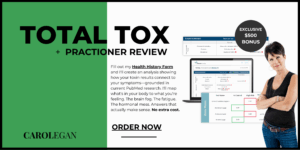
You can click the links in the graphic above, or use these:

Health History Form

Total Tox Burden Test

The Fine Print

[1] CLIA stands for Clinical Laboratory Improvement Amendments. These are federal regulatory standards that all U.S. laboratories must meet to ensure the accuracy, reliability, and timeliness of patient test results

[2] CAP stands for College of American Pathologists. This is an independent organization that provides a more comprehensive and rigorous laboratory accreditation program which meets or exceeds all CLIA requirements and is considered a gold standard in laboratory quality assurance.

Love it? Share it!

  • Share on Facebook (Opens in new window) Facebook
  • Share on X (Opens in new window) X
  • Share on Pinterest (Opens in new window) Pinterest
  • Share on LinkedIn (Opens in new window) LinkedIn
  • Share on Tumblr (Opens in new window) Tumblr
  • Share on Pocket (Opens in new window) Pocket
  • Share on Reddit (Opens in new window) Reddit
  • Print (Opens in new window) Print
  • Email a link to a friend (Opens in new window) Email

Filed Under: Uncategorized Tagged With: environmental toxins

Why Treating Symptoms Instead of Root Causes Destroys Your Health (and Your Spirit)

October 28, 2025 By cegan

Have you ever had a headache?

Of course you have. Recent studies show that 52% of the global population experiences active headaches, but you don’t need a statistic to know this truth – you’ve lived it.

Let’s look back at your own headache experience for a second.

Your alarm goes off, you hit snooze once or twice, then finally drag yourself out of bed, and there it is: that tightness in your neck, the pressure behind your eyes. You’ve woken up with a headache.

So you trudge to the bathroom, grab some aspirin, wash it down with coffee, and wait for relief.

In a few hours, hopefully sooner, the pain subsides. You feel better. Problem solved – or is it?

The Quick Fix vs. The Real Cause

If you pay close attention, there’s one split-second thought that flashes through your mind on that walk to the bathroom:

“I know why this is happening.”

If you’re in your twenties, maybe you’ll say, “Yeah, I overdid it on the drinks last night.”

If you’re a new parent: “Baby didn’t sleep, so I didn’t get enough sleep – no wonder.”

If you’re working long hours: “Too much screen time again.”

Those thoughts pass in a millisecond, and then you reach for the pain relief.

But there’s something happening in that millisecond that most of us miss entirely. A choice, though it doesn’t feel like one. One path: we acknowledge why the headache is there – we said it ourselves on our walk to the bathroom – and then we suppress the symptom and move on. The other path: we listen to what our body is actually saying to us, and rather than acquiescing to the quick fix, we look to see if there’s a problem we need to address.

Most of us don’t even register the choice. We move on autopilot, so the second doesn’t even appear as an option. The master of understanding the unconscious mind, Carl Jung said,

“Until you make the unconscious conscious, it will direct your life and you will call it fate.” 

Now imagine you never change the habit, the root cause – say, the daily drinking, but keep masking the symptom with aspirin. What’s happening inside your body after weeks, months, or years of this pattern?

Just because the headache is ‘erased’ doesn’t mean the problem isn’t compounding. You’ve removed the symptom but not solved the root cause.

That one drink (and the daily aspirin) can and does trigger a whole chain reaction behind the scenes:

  • Irritates your stomach lining
  • Forces the liver to work overtime
  • Inflames the pancreas
  • Raises your blood pressure
  • Disrupts heart rhythm
  • Affects your nervous system
  • Strains your kidneys
  • Represses your immune system

All while you think there’s no problem.

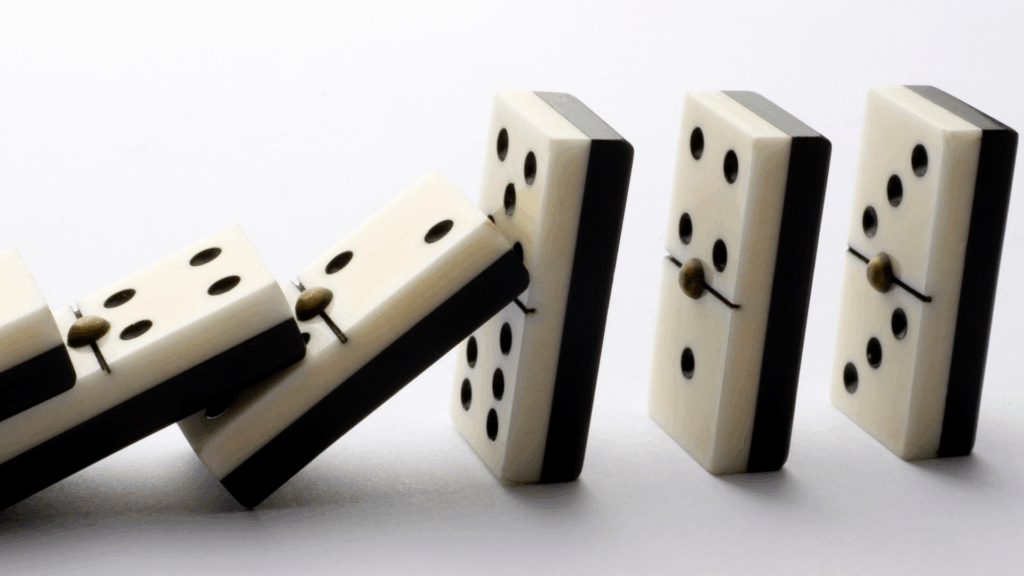
The Domino Effect: Body, Mind, and Spirit

The dominoes that fall aren’t just physical.

What happens to you emotionally and spiritually when your body keeps breaking down from both the quick fix and the deeper cause, while the pill gives you instant relief?

When you wake up every day foggy and inflamed, what happens to your thoughts, your energy, your self-belief?

Maybe you start thinking you’re just lazy or unmotivated. And once those beliefs take hold, they seep into who you think you are, who you think you’re not… and, consequently, everything you do.

Like a nebulous fog taking over, because you can’t see the far-reaching damage to your thoughts and spirit, you stop trusting yourself, your inner knowing, and even your body. You stop recognizing your ability to discern the cues your body is sending you.

And when you stop hearing the cues your body sends you, your relationship to your intuition – that still small voice within – fractures.

This is the mechanism we don’t discuss in medicine: every time we muffle the cues our body sends us rather than listen to them, we sever a very important connection. We train ourselves to see our body’s signals as problems to be eliminated rather than information to be interpreted.

When we disconnect from our body and all the ways it speaks to us, we disconnect from our deeper inner knowing, our spirit. And when we forget who we are at this level, when we lose touch with that internal compass that knows what’s true before our mind can explain it, we become unmoored and at the whim of literally everything and everyone around us.

That’s not healing. That’s spiritual bereftness, or perhaps even worse, spiritual bypassing —a poverty of the soul in which we’ve lost access to our own internal guidance system. And from this place, it’s very hard, if not impossible, to trust ourselves and the decisions we make.

Why Symptom-Based Healing Fails (and Root-Cause Healing Works)

Headaches are easy to spot, but this same pattern shows up everywhere in modern medicine:

Anxiety gets an SSRI. Irritable bowel gets antispasmodics or acid reducers. Hypothyroidism gets hormone replacement. Acne gets birth control or antibiotics. Fatigue gets energy drinks and caffeine. PMS gets painkillers and synthetic hormones.  Sleep issues get melatonin or sleeping pills. Depression gets chemical antidepressants. Joint pain gets NSAIDs or steroids. Brain fog gets stimulants or nootropics.

These medications can be life-changing when needed, but most are designed to treat symptoms rather than address root causes.

And I want to be clear: I’m not suggesting you white-knuckle through pain you don’t have to endure, or that taking medication means you’ve failed somehow. Sometimes you need the aspirin to get through the day. Sometimes the SSRI is what allows you to function. The medication itself isn’t the problem.

The problem is when we stop at symptom relief and never ask what else could be going on, when we use the pill as the solution instead of a temporary fix, when we mistake the absence of pain for the presence of health.

When root causes like environmental toxins, nutrient deficiencies, chronic inflammation, and unresolved emotional trauma go unaddressed, we end up treating symptoms while the fire below keeps spreading.

This isn’t just theoretical, it’s something I see in my client work every day.

A client came to me with “managed” hypothyroidism. After years of dosage adjustments, she still felt exhausted, her hair was thinning, and she couldn’t lose weight. ‘I can’t tell if I’m hungry or anxious, tired or depressed.’ Years of medicating had eroded her ability to discern what her body was saying.

That’s the disconnection from self I’m talking about.

The medication was replacing her thyroid hormone, but it wasn’t addressing why her thyroid struggled in the first place, why her body couldn’t use the hormone it was getting, or why she’d stopped trusting her own internal signals entirely. Through our work together, we slowly rebuilt the connection—body to mind, mind to spirit. Within six months, her energy returned and her hair stopped falling out. She got her health back. But more than that—she can hear and trust her body again

The medication managed her lab values, but root-cause, mind-body-spirit healing restored her connection to herself.

The Instant Gratification Trap

This pattern isn’t isolated to medicine. It’s embedded in how we live.

In a world of instant gratification, where there’s a pill for every ill and Amazon delivers tomorrow, it’s no surprise our approach to health mirrors our approach to everything else. “How we do anything is how we do everything.”

We want relief now. We want ‘it’ gone. Click, buy, fix, deliver.

Our entire way of life reflects our preference for quick fixes over the deeper work that is more often needed. Immediate gratification isn’t just about pills, food, social media, or the dopamine hits we’ve come to seek; it’s baked into our entire relationship with who we think we are and what we think we are capable of… including our health.

And that mindset keeps us locked in a symptom-based healing ideology rather than real root-cause healing work.

That hangover headache, the one from the drinks, or the late night, or too much screen time.

What happens if you don’t immediately reach for the aspirin? If you sit with it for five minutes and ask: what are you trying to tell me?

Maybe the answer is straightforward: I need to drink less. I need more sleep. I need boundaries with work.

Or maybe it’s layered: I’m using alcohol to numb something I don’t want to feel. I’m exhausted because I don’t like who I am when I slow down for too long. I’m staring at screens because I’m avoiding what I actually know I need to address.

Your body already knows.

A Holistic Approach to Real Healing

In my 15 years as a health coach,  I’ve seen it over and over: root causes of illness can be anything—gut imbalance, toxicity, emotional repression, spiritual disconnection, chronic stress.

And here’s what matters: you can address every physical root cause, fix the gut, balance the hormones, remove the toxins, and still not feel whole if you haven’t restored the fundamental connection between body and spirit.

Real healing isn’t just solving the physical puzzle. It’s rebuilding trust with yourself.

So before you reach for another quick-fix pill, injection, or supplement to numb the pain, pause.

Listen to your body. Get curious. Ask, “What are you trying to tell me?”

And if that question feels impossible to answer, if you hear nothing but confusion, start smaller:

Ask, “Where in my body do I feel this?” (Not just “I have a headache” but: pressure behind the eyes? Tension in the neck? Tightness in the jaw?)

What was happening in the hours before this started? (Not just yesterday’s drinking, but: Was I holding my breath during that meeting? Did I skip meals? Am I dehydrated?)

What pattern am I noticing? (Does this happen every Sunday night? Every time I talk to this person? Every month at the same point in my cycle?)

You’re not looking for the perfect answer. You’re rebuilding a relationship, a communication line, that’s vital to your health.

Because turning off a symptom is not the same as turning off the root cause.

The work of listening is harder than swallowing a pill. But it’s the only path back to yourself. And that self? Has been waiting for you to tune back in for a long time.

Love it? Share it!

  • Share on Facebook (Opens in new window) Facebook
  • Share on X (Opens in new window) X
  • Share on Pinterest (Opens in new window) Pinterest
  • Share on LinkedIn (Opens in new window) LinkedIn
  • Share on Tumblr (Opens in new window) Tumblr
  • Share on Pocket (Opens in new window) Pocket
  • Share on Reddit (Opens in new window) Reddit
  • Print (Opens in new window) Print
  • Email a link to a friend (Opens in new window) Email

Filed Under: Headaches, Brain Fog & Focus, Mind-Body-Spirit Connection, Root Cause, Start Here

Soil to Cell Coherence: Remembering What Feels Alive

October 7, 2025 By cegan

I’ve explored nearly every way of eating imaginable. I’ve been vegan. I’ve followed paleo. I use organ-based supplements to rebuild hormone balance after coming off thyroid medication.


But one memory persists — how incredible I felt when I began each morning with fresh-pressed juices, when my meals overflowed with living fruits and vegetables, when food felt like energy, vitality, and sunlight in tangible rubber-on-the-road ways. The clarity and energy I felt were undeniable.

When my hormones shifted after I took myself off thyroid medication, I sensed a need for a little clean, pasture-raised, and wild-caught animal protein to help bring my hormones back into balance. It was humbling and exciting to realize that I needed to learn more about the breadth of what the dietary spectrum has to teach.

This realization sent me deep into the research — and what I do every day for work for CellCore naturally became the tool I used to explore my own questions. I wanted to understand why this middle ground made sense to me now, despite my reverence for the plant-based philosophy. What I discovered is what I now call “soil to cell coherence” — the idea that true nourishment depends on the connection between the microbes in the soil, the vitality of plants, and the intelligence of the human cell.

Protein: The Science Beneath the Debate

There’s a lot of debate around protein. But what gets lost is the simple truth: the body needs enough to repair, rebuild, and sustain, but not as much as some camps assert.

The baseline recommendation is about 0.8 grams per kilogram of body weight per day to prevent deficiencies. But this is the minimum for survival, not the mark of optimal health.

Clinical studies show that adults, especially those of us over fifty or recovering from stress or illness, do better with 1.0 to 1.2 grams per kilogram. Highly active people may benefit from up to 1.6 grams.¹²³ Those ranges help maintain lean muscle, steady metabolism, and, in my personal and clinical experience, they’re vital for healing from toxin exposures.

A well-planned vegan diet can easily meet those needs. The key is variety — and enough total protein. In his book, Eat To Live, vegan doctor, Dr. Joel Fuhrman, recommends soy, lentils, quinoa, hemp, and peas to be sure to get every essential amino acid. What matters most though isn’t the label on the diet, it’s whether your body is getting the raw materials it needs to repair, renew, and rebuild itself.

Where Veganism Shines — and Where It Can Falter

Whole-food, plant-based diets offer, with lots of fresh, live, and local vegetables and fruits, provides powerful benefits. They calm inflammation, support heart health, and improve insulin sensitivity.⁴ They’re rich in polyphenols, antioxidants, and fiber — nutrients that feed a diverse and resilient gut microbiome.

But certain nutrients, such as vitamin B12, iron, zinc, DHA, and selenium, can be harder to get in full measure from plants alone.⁵⁶ Many long-time vegans stay vibrant by supplementing or adding functional foods that bridge those gaps… and supplementing with pills and potions out of necessity just doesn’t make sense to me, since I believe nature provides.

This is where We Are the New Farmers spirulina fits beautifully. It’s a living, nutrient-dense plant protein, full of chlorophyll, B vitamins, and trace minerals. It carries the same bright, life-force energy I feel in a glass of fresh juice!

For me, adding a small amount of clean, consciously raised animal protein brings grounding and stability. It provides easily absorbed nutrients, such as heme iron, vitamin A in its active form, and zinc, which are all crucial for cellular repair, metabolic function, and sustained energy.⁷

The Living Thread: From Soil to Cell

Science, and one of my current favorite doctors, Dr. Zach Bush, are now confirming what intuition has long known: our health mirrors the health of the soil. Regenerative farming restores microbial life to the earth and, with it, the nutrient richness of the plants and animals it nourishes.⁸⁹

Researchers are now even mapping the connections between the soil microbiome, the plant microbiome, and our own gut ecosystem — marking a living thread of communication that runs through all of life, what Buddhist monk Thich Nhat Hanh called the interbeingness of life. ¹⁰

When that thread stays intact, food becomes information the body recognizes. When it breaks, even ‘perfect’ diets lose meaning.

How I Practice Soil to Cell Coherence

  • Begin with life. Each morning I have a shote of wheatgrass, fresh pressed juice and/or spirulina in my smoothie, to cleanse my palate and remind my body what real, living food tastes and feels like.
  • Honor protein needs. I build each meal with intention, whether lentils and quinoa or a small portion of regeneratively raised fish or eggs.
  • Close the gaps. I supplement B 12 and DHA if I feel needed.
  • Feed the microbiome. I fill my week with a wide variety of plants — thirty or more whenever possible — and weave in living ferments that sustain the diversity a healthy gut depends on.
  • Support the soil. I buy from local, organic farms that work with nature rather than against it.

References

  1. Phillips SM. Appl Physiol Nutr Metab. 2016;41(5):565–572.
  2. Bauer J et al. J Am Med Dir Assoc. 2013;14(8):542–559.
  3. Morton RW et al. Br J Sports Med. 2018;52(6):376–384.
  4. Esselstyn CB et al. Am J Cardiol. 2014;113(7):1071–1076.
  5. Melina V et al. J Acad Nutr Diet. 2016;116(12):1970–1980.
  6. Pawlak R et al. Nutrients. 2013;5(12):4861–4878.
  7. Otten JJ et al. Dietary Reference Intakes. National Academies Press; 2006.
  8. Montgomery DR, Biklé A. Front Sustain Food Syst. 2021;5:682762.
  9. Chabbi A et al. Glob Change Biol. 2017;23(2):715–732.
  10. Walters WA et al. Front Microbiol. 2020;11:1858.

Closing Reflection

Whether vegan, omnivore, or somewhere in between, the goal is the same, to live in coherence and alignment with Mother Nature and her ecosystems that sustain us. For me, that means choosing foods that carry vitality and deep nourishment from the soil to the cell, and honoring the intelligence of Nature itself.

Love it? Share it!

  • Share on Facebook (Opens in new window) Facebook
  • Share on X (Opens in new window) X
  • Share on Pinterest (Opens in new window) Pinterest
  • Share on LinkedIn (Opens in new window) LinkedIn
  • Share on Tumblr (Opens in new window) Tumblr
  • Share on Pocket (Opens in new window) Pocket
  • Share on Reddit (Opens in new window) Reddit
  • Print (Opens in new window) Print
  • Email a link to a friend (Opens in new window) Email

Filed Under: Environmental Toxins, Protein and Real Food Nutrition

  • 1
  • 2
  • 3
  • …
  • 37
  • Next Page »

Search & You Shall Find

Topics

  • Environmental Toxins
  • Gut Issues & Bloating
  • Headaches, Brain Fog & Focus
  • Health Hacks
  • Mind-Body-Spirit Connection
  • Protein and Real Food Nutrition
  • Recipes
  • Root Cause
  • Start Here
  • Success Stories

DOWNLOAD YOUR FREE GUIDE

GET ON THE WAITLIST NOW!

FREE DETOX TIPS IN YOUR INBOX

As Seen In:

Forbes Huffington Post Better Connecticut Bella Mia Magazine Boston News Network Blog Talk Radio

Carol Egan – Heal Your Digestion to Heal Your Life

  • Facebook
  • Pinterest
  • Twitter

Let’s Talk About Health

I work with accomplished professionals who want to look and feel as healthy as they are successful. They spent years prioritizing success over health, and are now troubled by excess weight, exhaustion, and foggy thinking at work and home. I help them take control of their health, so they can focus on what matters in their life and career.

Schedule Your Call

Copyright © 2026 by Carol Egan · Privacy Policy · Disclaimer· Terms and Conditions