
Carol Egan

  • About
  • Detox Tools
  • Speaking
  • Coaching
  • Results
  • Articles
  • Resources
  • Shop
  • Contact

When Doing Nothing Does Everything

By cegan

closeup photo of white blanket

The Power of Doing Nothing (Yes, Really)

In a world obsessed with constant activity, we forget the power of stillness. What if our real strength isn’t in the hustle, but in the space between?

Doing nothing sounds counterintuitive—especially when we’re told to always be doing. But here’s the truth: the biggest shifts happen when we stop. When I stop, clarity shows up. Ideas rise, solutions surface, and a deeper wisdom comes through—one I can’t access when I’m always in motion. As Lao Tzu said, “By letting go, all gets done.” When I loosen my grip, things flow.

Einstein knew it too. His quiet walks weren’t idle. They were fuel for his greatest insights. Creativity dies under pressure. But it thrives when we give it space.

As the seasons change, I feel it. It’s time to slow down. This isn’t about doing nothing—it’s about making room for what’s ready to come through.

So, here’s the challenge: What if your most productive moment today is found in doing nothing? What brilliance might unfold if you just made space for it?

Love it? Share it!

  • Share on Facebook (Opens in new window) Facebook
  • Share on X (Opens in new window) X
  • Share on Pinterest (Opens in new window) Pinterest
  • Share on LinkedIn (Opens in new window) LinkedIn
  • Share on Tumblr (Opens in new window) Tumblr
  • Share on Reddit (Opens in new window) Reddit
  • Print (Opens in new window) Print
  • Email a link to a friend (Opens in new window) Email

Filed Under: Uncategorized

What’s NF-κB? (And Why It Matters for Your Health)

By cegan

padlock on metal gate during daytime

We’ve all been hearing a lot about immunity lately. But here’s something you might not know yet: NF-κB. It might look like a jumble of letters, but this little protein has a massive impact on how our bodies respond to threats—whether it’s toxins, infections, or stress.

Why NF-κB Matters. NF-κB is a key player in major health conditions—cancer, arthritis, chronic inflammation, heart disease. According to the National Cancer Institute, “NF-κB may be overactive or found in higher than normal amounts in some types of cancer cells.” In plain terms: when NF-κB is too active, it fuels cancer growth. But it doesn’t stop there—NF-κB is also tied to inflammatory conditions like asthma and autoimmune diseases like rheumatoid arthritis.

The biggest trigger? Toxins. They’re everywhere—polluted air, contaminated water, chemicals in food. They activate NF-κB, driving inflammation higher and higher. And over time? This sets the stage for serious, long-term health problems. The kind that creep in quietly until one day, they’re impossible to ignore.

But it’s not just inflammation. Toxins can also mess with our DNA, accelerating disease progression. It’s a slow erosion of health, happening beneath the surface—until one day, it’s too loud to overlook.

First step? Simple: switch to distilled water. By cutting toxins from your water, you reduce the burden on your immune system and give your body room to breathe. This isn’t some passing wellness trend. It’s a powerful move toward taking control of your health, starting with the water you drink.

Why Detox Matters. NF-κB is just one molecule, but it’s a reminder why detoxification is critical. Clearing toxins is the key to unlocking healing. It’s how we help our immune system do what it’s meant to do—keep us healthy, keep us resilient.


References

NF-κB, or Nuclear Factor kappa-light-chain-enhancer of activated B cells, is a vital protein complex that regulates immune responses, inflammation, cell growth, and survival. It remains inactive in the cytoplasm until triggered by various stimuli, such as stress, infections, and environmental factors. Once activated, NF-κB moves to the nucleus of the cell, where it binds to specific DNA sequences to promote the expression of genes involved in immune responses and inflammation. However, when NF-κB activity is dysregulated, it can lead to various diseases, including cancer, inflammatory disorders, and autoimmune diseases.

  • Liu T, Zhang L, Joo D, Sun SC. NF-κB signaling in inflammation. Signal Transduct Target Ther. 2017;2:17023. doi:10.1038/sigtrans.2017.23
  • National Cancer Institute, https://www.cancer.gov/publications/dictionaries/cancer-terms/def/nf-kb
  • Zinatizadeh MR, Schock B, Chalbatani GM, Zarandi PK, Jalali SA, Miri SR. The Nuclear Factor Kappa B (NF-kB) signaling in cancer development and immune diseases. Genes Dis. 2020;8(3):287-297. Published 2020 Jul 18. doi:10.1016/j.gendis.2020.06.005
  • Barnabei L, Laplantine E, Mbongo W, Rieux-Laucat F, Weil R. NF-κB: At the Borders of Autoimmunity and Inflammation. Front Immunol. 2021;12:716469. Published 2021 Aug 9. doi:10.3389/fimmu.2021.716469
  • Coto E, Reguero JR, Avanzas P, et al. Gene variants in the NF-KB pathway (NFKB1, NFKBIA, NFKBIZ) and risk for early-onset coronary artery disease. Immunol Lett. 2019;208:39-43. doi:10.1016/j.imlet.2019.02.007
  • Lasitha NK, Mahendra J, Selvaraj JS, Rajendran S, Sindhu K, Romi KS, Kanchana SB, Roy D. Exploring the Impact of NF-KB1 Gene Polymorphism. J Adv Zool. 2023;44(s-5):1551-1562. doi:10.17762/jaz.v44iS-5.1187.

Love it? Share it!

  • Share on Facebook (Opens in new window) Facebook
  • Share on X (Opens in new window) X
  • Share on Pinterest (Opens in new window) Pinterest
  • Share on LinkedIn (Opens in new window) LinkedIn
  • Share on Tumblr (Opens in new window) Tumblr
  • Share on Reddit (Opens in new window) Reddit
  • Print (Opens in new window) Print
  • Email a link to a friend (Opens in new window) Email

Filed Under: Uncategorized

How I Learned That Doing Less Doesn’t Mean Falling Short

By cegan

a dirt road in the middle of a forest

Time management has always been a bit of a paradox for me—the constant balancing act between doing less and worrying I’m not doing enough. But here’s what I’ve come to understand: the challenges I’ve faced have offered me an unexpected gift—gratitude. Not just a fleeting appreciation, but the kind of gratitude that brings tears to my eyes. It’s deep. It’s real. And it’s shifted the way I experience my work. It’s more than just loving what I do—it feels like a privilege, and I carry that awareness with me every day.

But it’s not just about passion for the work. Every obstacle I’ve encountered has prepared me for this moment. C.S. Lewis captured it perfectly: “Hardships often prepare ordinary people for an extraordinary destiny.” That quote resonates with my journey. It feels like I’ve been entrusted with something bigger—something with purpose. So, why stop when excellence is still within reach? Why hold back when there’s more I can give?

In The Surrender Experiment, Michael Singer reminds us to approach the work in front of us with all our heart, as if the universe itself handed it to us—because it did. That’s exactly how I see my work. It comes from a higher place, and I’m here to show up, fully, every day.

But here’s where it deepens. Michael Easter, in The Comfort Crisis, says: “The comfort we seek is often the enemy of the life we desire.” And David Goggins drives it home: “You are in danger of living a life so comfortable and soft that you will die without ever realizing your true potential.” Those words hit hard. I don’t want comfort to become my barrier. I want to stretch, push, and strive for that next level of excellence. But I also know this: it’s about balance. Hard work has to be paired with care for myself.

For me, nature brings that balance. I’m drawn to the natural rhythms—the seasons, the sunrise, the stillness of the woods. It reminds me that I’m part of something bigger. Nature refuels me and reconnects me with my purpose. It’s not about doing more—it’s about doing what truly matters.

The deeper truth? My struggle has never been about time management. It’s about the fear that doing less means I’m not tapping into my full potential. But I’ve learned that when I honor life’s natural rhythms—both in work and in rest—I align with something greater than myself. I find harmony in the ebb and flow of life.

Here’s how I’m re-centering my approach to stay grounded in what truly matters:

  1. Lean into Nature When I feel overwhelmed, I turn to nature. It anchors me, brings me into the present, and reminds me that everything has its season. In these moments of slowing down, my best ideas surface.
  2. Embrace the Pause I’m learning to let pauses happen. Instead of filling every moment, I’m creating intentional space in my schedule to reflect, recharge, and let creativity rise naturally.
  3. Prioritize What Matters It’s easy to get caught up in doing more, but I’m focusing on what truly aligns with my values and purpose. If it doesn’t serve that, it doesn’t get my time or energy.
  4. Listen to the Body My body is a wise guide. When it signals a need to slow down, I’m honoring that. Rest isn’t a sign of failure—it’s an investment in my ability to give more when it matters most.

Love it? Share it!

  • Share on Facebook (Opens in new window) Facebook
  • Share on X (Opens in new window) X
  • Share on Pinterest (Opens in new window) Pinterest
  • Share on LinkedIn (Opens in new window) LinkedIn
  • Share on Tumblr (Opens in new window) Tumblr
  • Share on Reddit (Opens in new window) Reddit
  • Print (Opens in new window) Print
  • Email a link to a friend (Opens in new window) Email

Filed Under: Uncategorized

Yes, We’re Talking About Coffee Enemas—And Why You Should Care

By cegan

Let’s be real: talking about enemas—especially coffee enemas—can feel a little…awkward. But here’s the deal: incorporating coffee enemas into a detox routine delivers results that are nothing short of incredible. For me, they’ve become a go-to recommendation for detox support. And, believe me, I’ve seen them speed up healing in ways that might surprise you.


Why Coffee? Why an Enema?

Okay, so what’s the deal with coffee enemas? Here’s the short version: they play a unique role in helping your liver—the body’s main detox organ—do its job more effectively. Coffee enemas help flush out those stubborn toxins that get stuck, clear the bile ducts, and open up the body’s drainage pathways. Translation? They make you feel better. Even though it might feel weird to talk about, the benefits are huge and far outweigh any discomfort.

A Little History

Before you start thinking, Did we just invent this whole thing?, let me assure you: enemas are old. We’re talking ancient Egyptians, 1550 BC old. The Greeks loved them, too. Even during World War I, a nurse once used coffee instead of water in an enema for a wounded soldier—and the results were so good that coffee enemas stuck around.

Fast forward to Dr. Max Gerson, who took coffee enemas to the next level by integrating them into his protocol for treating chronic illnesses. He knew that if the liver could function better, the whole body could heal faster. That’s how I discovered their true power—and why I recommend them to my clients today.

Modern-Day Benefits

So why are coffee enemas still a thing today? Simple. They work. Functional medicine practitioners use them to support liver health and flush toxins out of the body. The primary action happens in the liver and bile ducts: coffee stimulates bile release, which in turn helps clear out toxins, pathogens, and waste. Better bile flow means better digestion and nutrient absorption. Win-win.

But wait, there’s more. Coffee enemas activate the vagus nerve (the body’s relaxation switch) and increase glutathione, a powerful antioxidant that protects your cells and helps your body metabolize toxins. That’s like detox superpowers right there.

What’s in the Coffee?

Let’s nerd out for a second on the biochemistry. Coffee contains two compounds—cafestol and kahweol palmitates—that boost glutathione production in the liver and intestines. That’s important because glutathione is the body’s master detoxifier. Fun fact: lighter roasted beans contain even more of these compounds, which makes them the better choice for an enema. Who knew your morning brew had so much going on?

Together, these compounds reduce oxidative stress, support liver health, and boost your body’s natural detox process.

Detoxing Your Liver (and More)

By stimulating bile flow, coffee enemas help clear out the bile ducts, keeping toxins from building up in the liver. Caffeine plays a role too—it dilates blood vessels, making it easier for those helpful compounds to do their job. The result? More bile release, better digestion, and a happier liver.

But it doesn’t stop at the liver. Coffee enemas also reduce inflammation and boost glutathione in the intestines, protecting gut health. Studies even suggest they may benefit conditions like ulcerative colitis by reducing inflammation in both the liver and the gut.

Emotional Detox (Yep, That’s a Thing)

Coffee enemas don’t just detox the body—they can have a big impact on emotional health, too. In Traditional Chinese Medicine (TCM), the liver is believed to hold emotional toxins. By releasing those toxins, many people feel calmer and emotionally lighter. Stimulating the parasympathetic nervous system (aka the “rest and digest” mode) can help relieve anxiety and depression. In fact, it’s not unusual for people to feel clearer, calmer, and more at peace after a coffee enema.

Practical Tips

Look, I get it—coffee enemas can seem intimidating at first. But trust me, they get easier. Here’s what you’ll need: organic, light-roasted, mold-free coffee beans (my recommendation), distilled water, a coffee enema kit, a French press, coconut oil, and some towels. The best time to do one? In the morning, after a bowel movement.

Here’s a quick rundown of how to do it:

  1. Brew 3 tablespoons of ground coffee in 4 cups of distilled water. Let it cool to body temperature.
  2. Find a comfortable spot to lie down (towels are your friend here).
  3. Fill your enema bag with the cooled coffee solution.
  4. Lubricate the tube, lie on your left side, and gently insert the tube about 6 inches.
  5. Let half of the coffee solution flow in, then switch to your right side and relax for 15-20 minutes.
  6. Release the solution after 15-20 minutes and repeat with the second half.
  7. Hydrate well afterward, and relax as your body processes the detox.

Common Concerns

Worried about holding the enema for 15-20 minutes? No worries. Even shorter times are beneficial. If you feel worse afterward, it might be due to a sluggish bile system. Start with a lower coffee concentration and work your way up to ease discomfort.

Also, don’t forget: coffee enemas can deplete minerals, so make sure you’re supplementing with something like CellCore’s CT-Minerals to replenish what you lose.

In Closing…

Yes, talking about coffee enemas can be awkward. But here’s the thing: the benefits far outweigh any discomfort. They’re a powerful, affordable tool for detoxification and can dramatically support your liver, energy levels, and emotional well-being. In my experience, they’ve fast-tracked healing in ways that few other therapies can.


Love it? Share it!

  • Share on Facebook (Opens in new window) Facebook
  • Share on X (Opens in new window) X
  • Share on Pinterest (Opens in new window) Pinterest
  • Share on LinkedIn (Opens in new window) LinkedIn
  • Share on Tumblr (Opens in new window) Tumblr
  • Share on Reddit (Opens in new window) Reddit
  • Print (Opens in new window) Print
  • Email a link to a friend (Opens in new window) Email

Filed Under: Uncategorized

50 Years of Roundup: How Glyphosate Has Been Hurting Us

By cegan

Today marks 50 years since glyphosate was introduced into agriculture. Touted as a miracle weed killer, it was designed to protect crops and increase yields. But after decades of use, the truth is clearer than ever: glyphosate’s legacy extends far beyond the fields. It reaches into our bodies, into our biology, and into the foundation of human health.

I’ve spent years researching the effects of environmental toxins, and glyphosate keeps showing up in ways we can’t ignore. It doesn’t just kill weeds, it disrupts life inside us.

What glyphosate does inside us

Glyphosate mimics glycine, one of the body’s most essential amino acids. Glycine helps our proteins fold correctly, our enzymes function, and our connective tissues stay strong; glycine is like the scaffolding that keeps your body running smoothly, supporting everything from joint flexibility to tissue strength and enzyme activity. When glyphosate replaces glycine, proteins misfold. Enzymes malfunction. Collagen weakens. I see this play out in joint pain, tendon injuries, arthritis—conditions now appearing earlier and more aggressively in people of all ages.

But the damage doesn’t stop there.

Glyphosate attacks the gut. It wipes out beneficial bacteria like Lactobacillus and Bifidobacteria, key players in digestion, vitamin production, and immune balance. In their place, harmful bacteria like Clostridia and Salmonella thrive. This microbial imbalance, called dysbiosis, contributes to food sensitivities, autoimmune issues, and a compromised immune response.

It also damages the gut lining, leading to what’s commonly called leaky gut. I’ve seen this connection in clients with chronic bloating, fatigue, and systemic inflammation. When the gut barrier breaks down, toxins and undigested proteins cross into the bloodstream, confusing the immune system and triggering inflammation, histamine, and mast-cell responses. Over time, this can spiral into autoimmune conditions.

The brain-gut connection

The gut doesn’t just digest food, it helps produce neurotransmitters like serotonin and dopamine. Glyphosate interferes with this process by blocking an enzymatic process in gut bacteria called the shikimate pathway, which they use to create key amino acids like tryptophan and tyrosine. The result? Mood imbalances, anxiety, poor sleep, and brain fog. It’s not a stretch to say glyphosate affects how we think, feel, and cope.

Neuroinflammation is another piece of the puzzle. Glyphosate activates microglia, the brain’s immune cells, keeping them in a constant state of alarm. This chronic inflammation damages neurons and has been linked to conditions like Alzheimer’s, Parkinson’s, and even autism. I’ve worked with families, including my own, who feel like they’re chasing shadows when it comes to their loved one’s cognitive decline or developmental challenges. Glyphosate may be one of those shadows.

More than just a gut issue

Glyphosate disrupts hormone balance. It mimics estrogen, suppresses testosterone, and interferes with thyroid hormones. I’ve seen the results in clients struggling with infertility, endometriosis, thyroid dysfunction, and early puberty. These aren’t isolated cases, they reflect harmful patterns we need to pay more attention to.

It also accumulates. Glyphosate has been found in placental tissue, sperm, and breast milk. That means exposure doesn’t end with us, it continues into the next generation. This bioaccumulation raises serious concerns about long-term fertility, childhood development, and transgenerational toxicity.

What can we do?

We can’t change the last 50 years, but we can change what happens next. The first step is awareness, in understanding how glyphosate affects us. From there, we can begin to remove it from our lives and support the body’s detox pathways.

In my practice, I guide people through personalized protocols that include dietary shifts, gut support, detox strategies, and lifestyle changes. That might mean adding sulfur-rich foods, supporting sulfate metabolism, or using specific binders. This isn’t about fear, it’s about staying informed and acting wisely

Moving forward

Glyphosate is a story about agriculture. But it’s also a story about us. About how one chemical has quietly infiltrated the systems that keep us well.

The good news? Healing is natural once we clear what stands in the way.

In upcoming posts, I’ll share more about the specific systems glyphosate affects and how to support them. For now, ask yourself: what’s one step you can take today to reduce your exposure and reclaim your health?

Love it? Share it!

  • Share on Facebook (Opens in new window) Facebook
  • Share on X (Opens in new window) X
  • Share on Pinterest (Opens in new window) Pinterest
  • Share on LinkedIn (Opens in new window) LinkedIn
  • Share on Tumblr (Opens in new window) Tumblr
  • Share on Reddit (Opens in new window) Reddit
  • Print (Opens in new window) Print
  • Email a link to a friend (Opens in new window) Email

Filed Under: Uncategorized

Beneath the Surface: Identifying the Root Cause

By cegan

When we sit down to work together, I’m not seeing just a collection of symptoms. I’m seeing you—a unique individual, with a story that’s been unfolding for years, often in ways you may not even realize. My role? To make sense of that story. To listen between the lines and hear what your body’s been whispering—or now maybe screaming—all along.

I don’t stop at surface-level discomforts—whether it’s digestion acting up, fatigue that won’t quit, or hormones out of sync. Those are just signals, and my focus is to follow them to the source: environmental toxins, parasites, the relentless stress of modern life. That’s where transformation begins.

Beneath the Surface. Before we even meet, I’ve already started tracing your story by diving into a comprehensive test. This isn’t just any test. It pulls back the curtain, revealing the toxins—the real villains—disrupting your body’s natural rhythms. Whether it’s mycotoxins that have snuck in unnoticed or heavy metals quietly building up over time, these clues help us get to the origin of the issue.

Take acid reflux. You may think it’s a dietary issue. But beneath it all? It could be a parasitic infection or even heavy metals interfering with your system. Each symptom is a breadcrumb, leading us to the root cause.

The Root Cause. The world is full of toxins. They’re in the food we eat, the air we breathe, the water we drink. Chemicals like BPA from plastics and atrazine from herbicides enter our bodies and disrupt our systems—slowing down liver function, throwing hormones off balance, and leaving you far from your best.

BPA, for instance, can disrupt estrogen receptors, leading to hormone imbalances, bloating, and fatigue. Atrazine? It impairs detox pathways, as well as mitochondrial and endocrine function, causing exhaustion, digestive issues, and hormonal disruptions. Once we uncover these hidden culprits, the body can begin healing.

Invisible Invaders. Parasites and mycotoxins don’t play fair, either. Parasites erode your gut lining, making it harder for you to absorb the nutrients you need. Mycotoxins disrupt your hormones and immune system, sometimes mimicking or blocking your body’s own signals, leading to imbalances like irregular periods in women or reduced testosterone and infertility in men.

By identifying these invisible invaders, we work to restore balance at the source, rather than just addressing the symptoms.

Stress. You feel it, but it’s more than just a sensation. It ramps up cortisol, interrupts digestion, and weakens your ability to absorb nutrients. And when you layer on environmental toxins and unhealthy habits, it creates the perfect storm for chronic health issues.

I help clients realign holistically, weaving detox strategies with practical changes that bring their bodies back into balance, allowing them to thrive.

Love it? Share it!

  • Share on Facebook (Opens in new window) Facebook
  • Share on X (Opens in new window) X
  • Share on Pinterest (Opens in new window) Pinterest
  • Share on LinkedIn (Opens in new window) LinkedIn
  • Share on Tumblr (Opens in new window) Tumblr
  • Share on Reddit (Opens in new window) Reddit
  • Print (Opens in new window) Print
  • Email a link to a friend (Opens in new window) Email

Filed Under: Uncategorized

Mary Anne’s Healing Journey: Addressing the Root Causes of Chronic Illness

By cegan

The Journey is On LED signage

When Mary Anne came to me, she was struggling with complex health issues that stemmed from high levels of environmental toxins, mycotoxins, parasites, and Lyme disease. Her case illustrates how these hidden culprits can wreak havoc on the body—and how we can address them.

Mary Anne’s Health Challenges

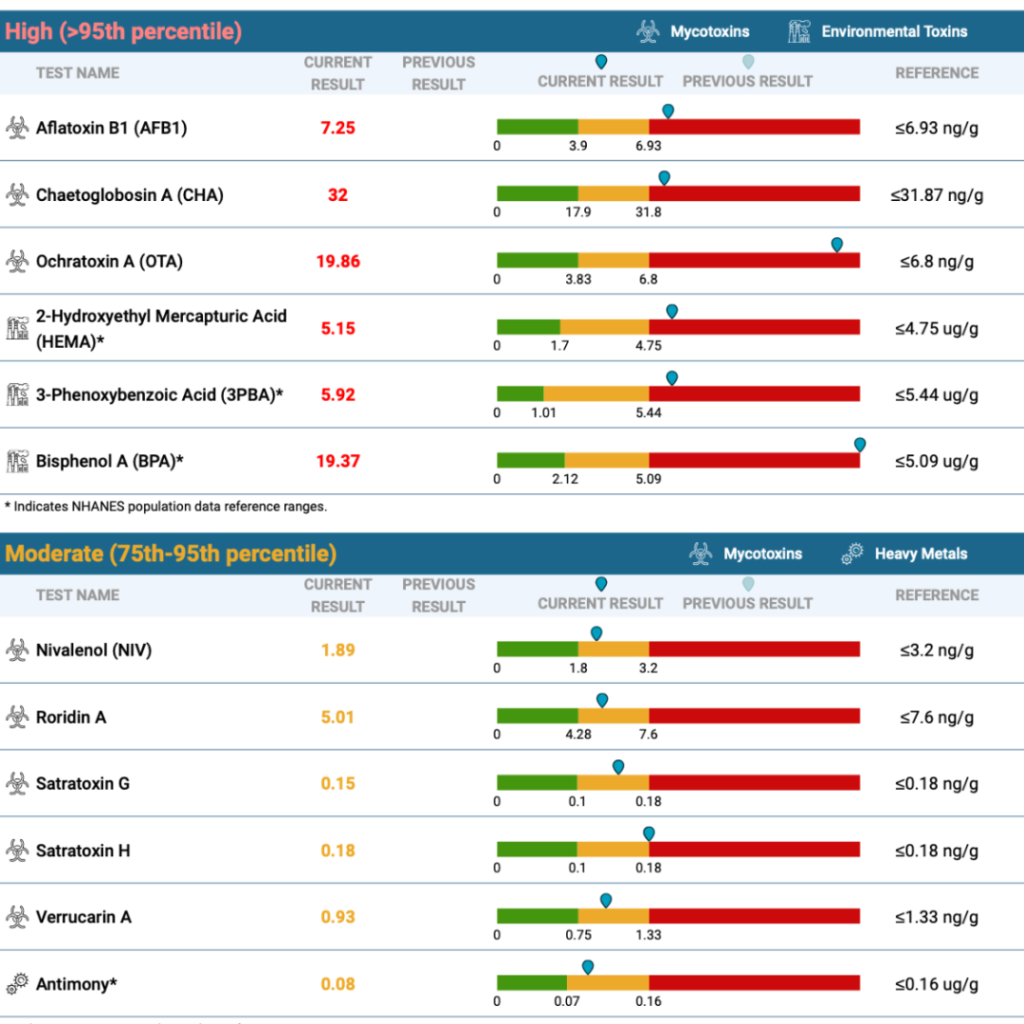
Mary Anne dealt with intense pain in her hips, knees, and ankles, along with numbness and weakness in her legs and feet. She had also been diagnosed with Hashimoto’s thyroiditis, high blood pressure, and osteoporosis. Lab tests revealed high levels of:

  • Aflatoxin B1 (AFB1)
  • Chaetoglobosin A (CHA)
  • Ochratoxin A (OTA)
  • 2-Hydroxyethyl Mercapturic Acid (HEMA)
  • 3-Phenoxybenzoic Acid (3PBA)
  • Bisphenol A (BPA)

Her results also showed high levels of parasites and Lyme disease—further complicating her recovery.

What’s Really Going On?

Understanding how these toxins affect the body was key to getting to the root of Mary Anne’s issues.

  • Aflatoxin B1 (AFB1): Found in contaminated grains and nuts, AFB1 damages the liver, impacts metabolism, and weakens the immune system, making autoimmune conditions like Hashimoto’s worse.
  • Chaetoglobosin A (CHA): This mycotoxin, from mold, interferes with cell structure and function, leading to nerve damage—causing the numbness and weakness Mary Anne experienced.
  • Ochratoxin A (OTA): A mycotoxin found in foods like coffee and cereals, OTA harms the kidneys and messes with thyroid function, which contributed to her pain, high blood pressure, and thyroid issues.
  • 2-Hydroxyethyl Mercapturic Acid (HEMA): A marker of exposure to pesticides, HEMA causes DNA and nerve damage, which aligned with Mary Anne’s neurological symptoms.
  • 3-Phenoxybenzoic Acid (3PBA): A metabolite of insecticides, 3PBA disrupts the nervous system and endocrine function, contributing to her osteoporosis and thyroid problems.
  • Bisphenol A (BPA): Found in plastics, BPA is a hormone disruptor that adds to oxidative stress and inflammation, making conditions like Hashimoto’s and osteoporosis worse.

The Role of Parasites and Lyme Disease

The toxins in Mary Anne’s body suppressed her immune system and weakened her mitochondria, creating a breeding ground for parasites and Lyme disease. Parasites cause inflammation, disrupt nutrient absorption, and worsen pain. Meanwhile, Lyme disease—a bacterial infection—was likely the trigger for her joint pain, weakness, and numbness.

Mary Anne’s Wellness Program

To address the root causes of Mary Anne’s health challenges, I designed an intensive year-long protocol. We focused on:

  • Fulvic and humic acid formulations to support her mitochondria and immune system.
  • Targeted herbs, binders, and anti-parasitic treatments to help her body release toxins and eliminate pathogens.
  • Diet and lifestyle changes, including coffee enemas, infrared saunas, and mind-body healing practices to support her recovery.

The Journey to Healing

Mary Anne’s healing journey wasn’t easy—her body was sensitive, and we had to move slowly. But as we identified and addressed the root causes, she started to experience gradual improvements. Over time, her body opened up to the process, releasing toxins and pathogens, and allowing her to heal.

In my practice, I’ve seen profound transformations when we focus on root causes. Mary Anne’s case shows the power of addressing the full picture—not just treating symptoms—through a comprehensive and patient approach.

Love it? Share it!

  • Share on Facebook (Opens in new window) Facebook
  • Share on X (Opens in new window) X
  • Share on Pinterest (Opens in new window) Pinterest
  • Share on LinkedIn (Opens in new window) LinkedIn
  • Share on Tumblr (Opens in new window) Tumblr
  • Share on Reddit (Opens in new window) Reddit
  • Print (Opens in new window) Print
  • Email a link to a friend (Opens in new window) Email

Filed Under: Uncategorized

Peter’s Detox Journey: What Happens When Your Body Starts Clearing Out Toxins

By cegan


Let’s talk about detox—but not the juice cleanse kind. I mean the real, down-and-dirty, and sometimes uncomfortable process of your body clearing out environmental toxins. One client, Peter, came to me with a history of chronic exposure to toxins like pesticides, heavy metals, and mycotoxins. His story is a great example of how detox can trigger big changes—especially in how the body manages fats like triglycerides and cholesterol.
What Happens During Detox?

When you start detoxing, it’s not all smooth sailing. Your body can get overwhelmed, especially your liver, which is ground zero for processing toxins. That’s what happened with Peter. As his body began releasing toxins, his liver struggled to keep up, and it triggered all sorts of metabolic shifts—including changes in his cholesterol and triglyceride levels.

Inflammation: The Body’s Response to Detox

As Peter’s body worked to get rid of the toxins, his immune system went into action, sparking inflammation. This is a natural part of the process—your body’s way of dealing with harmful stuff. But it also sets off a chain reaction that can affect things like lipid metabolism.

In Peter’s case, inflammation kicked up levels of cytokines (think of them as the body’s SOS signals), like TNF-α and IL-6, which directly influence how your body processes fats.

How Environmental Toxins Mess with Your Lipid Metabolism

Research shows that certain environmental toxins seriously mess with how your body handles fats. Here’s what was at play in Peter’s case:

  • Pesticides and Herbicides: Long-term exposure to chemicals like glyphosate and organophosphates can disrupt lipid metabolism by inducing inflammation and oxidative stress. The result? Peter’s triglycerides and cholesterol started to fluctuate.
  • Mycotoxins: These toxins, produced by mold, are notorious for causing liver damage, which throws off the liver’s ability to regulate fat metabolism.
  • Heavy Metals: Lead, mercury, and cadmium—these heavy hitters can lead to oxidative stress and overload the liver, adding another layer of complexity to lipid regulation.

When the Liver Gets Overloaded

Your liver does a lot of heavy lifting when it comes to detox and managing fats. But when it’s overloaded—like in Peter’s case—it can’t function optimally. And when the liver is struggling, so is your lipid metabolism.

For Peter, this meant his liver couldn’t keep up with its usual job of regulating triglycerides and cholesterol. The result? Rising triglyceride levels, which is common when the liver is under stress.

Oxidative Stress: The Detox Double Whammy

As Peter’s body worked to flush out toxins, it also had to deal with oxidative stress (think of it like your body’s version of rusting). This added another challenge to an already stressed liver and further complicated his lipid metabolism.

Oxidative stress damages cells, including fats and proteins, making it even harder for the liver to manage fat levels. For Peter, this meant more fluctuations in triglycerides and cholesterol.

ER Stress: The Cellular Ripple Effect

Another piece of the puzzle was something called endoplasmic reticulum (ER) stress. The ER is responsible for managing protein folding and fat metabolism in your cells. But when toxins build up, it can stress out the ER, leading to misfolded proteins and disrupted fat metabolism. Peter’s body was already working overtime, and this added another layer of complexity to his detox process.

The Takeaway: Detox Isn’t Always a Straight Line

Peter’s detox journey shows that clearing toxins from your body isn’t just about removing the bad stuff—it’s also about managing the side effects that come with it. Inflammation, liver overload, and oxidative stress all play a part in how your body responds, especially when it comes to things like triglyceride and cholesterol levels.

The good news? By understanding what’s happening and why, we can work with the body’s natural processes and help guide it back to balance. Detox is a journey, but with the right support, it’s one that leads to a healthier, more balanced outcome.

Love it? Share it!

  • Share on Facebook (Opens in new window) Facebook
  • Share on X (Opens in new window) X
  • Share on Pinterest (Opens in new window) Pinterest
  • Share on LinkedIn (Opens in new window) LinkedIn
  • Share on Tumblr (Opens in new window) Tumblr
  • Share on Reddit (Opens in new window) Reddit
  • Print (Opens in new window) Print
  • Email a link to a friend (Opens in new window) Email

Filed Under: Uncategorized

How Slow, Steady Detox Changed Everything for My Client

By cegan

She had tried everything.

This diet. That supplement. Switching from one to the next, hoping for a breakthrough. But nothing worked.

Her lab results showed why: high levels of environmental toxins, mycotoxins, parasites, and Lyme in her body.

And she was super sensitive—triggered by the slightest changes. Detox protocols had to be slow, with microdoses carefully adjusted to what her body could handle.

Pushing too hard only made things worse. So we took it slow, communicated often, and adjusted the pace constantly. I guided her to listen to her body and respond to how she was feeling.

Little by little, her body started to open up.

Her sensitivity decreased. The detox process deepened.

Lifelong digestive issues and autoimmune symptoms that had plagued her for years began to subside. She was healing—slowly but surely.

Her progress is a testament to her patience and perseverance.

Trust the process. Trust the slow, steady approach. Listening to your body is everything.

When the barriers to healing are removed, the body knows how to heal itself.

Love it? Share it!

  • Share on Facebook (Opens in new window) Facebook
  • Share on X (Opens in new window) X
  • Share on Pinterest (Opens in new window) Pinterest
  • Share on LinkedIn (Opens in new window) LinkedIn
  • Share on Tumblr (Opens in new window) Tumblr
  • Share on Reddit (Opens in new window) Reddit
  • Print (Opens in new window) Print
  • Email a link to a friend (Opens in new window) Email

Filed Under: Uncategorized

Why I Stopped Taking Thyroid Medication (And What Happened Next)

By cegan

After years of taking thyroid medication, I made a decision that felt both terrifying and liberating: I stopped taking it.

This journey hasn’t been easy. For the past five months, I’ve spent more time in bed than I ever thought possible. I’ve been working from “horizontal mode,” trading my gym routine, social life, and any sense of “normal” for a slower, more challenging pace of life.

But I knew it was time to take this step. After five years of deep research into the impact of endocrine-disrupting chemicals, it became clear that I couldn’t ignore the bigger picture any longer.

The moment I made the choice to go off the medication, I felt a sense of deep, unshakable knowing that healing was within my reach. That said, I had no idea how tough the road ahead would be.

For months, I’ve been adapting—navigating life with a fraction of my usual energy and a body temperature that always seemed too low. The hardest part? The constant worry that I might be making a huge mistake. There were so many days when faith was hard to hold onto.

But this journey has given me something I never expected: a crash course in self-compassion. I’ve learned to work in short bursts and rest without guilt. I’ve realized that slowing down doesn’t mean I’m failing—it means I’m healing.

It took courage and resilience to keep believing in my decision, especially on the hardest days. I had to give myself more grace than I ever thought possible. I learned to listen to my body in a way that I hadn’t before—trusting its wisdom, even when I was full of doubt.

And then, slowly, things started to change. My hair grew back. My brain fog lifted. I started sleeping better than I had in years.

This process forced me to question everything I thought I knew about hormone supplementation and endocrine-disrupting chemicals. As a health coach, I now feel more qualified than ever to help my clients by addressing the root causes of their health challenges—particularly when it comes to toxins in our environment.

I’m sharing my story because I want others to know that true healing takes knowledge and courage… and commitment. Removing environmental toxins isn’t optional—it’s essential for real, lasting change.


Love it? Share it!

  • Share on Facebook (Opens in new window) Facebook
  • Share on X (Opens in new window) X
  • Share on Pinterest (Opens in new window) Pinterest
  • Share on LinkedIn (Opens in new window) LinkedIn
  • Share on Tumblr (Opens in new window) Tumblr
  • Share on Reddit (Opens in new window) Reddit
  • Print (Opens in new window) Print
  • Email a link to a friend (Opens in new window) Email

Filed Under: Uncategorized

  • « Previous Page
  • 1
  • …
  • 5
  • 6
  • 7
  • 8
  • 9
  • …
  • 36
  • Next Page »

Search & You Shall Find

Topics

  • Environmental Toxins
  • Gut Issues & Bloating
  • Headaches, Brain Fog & Focus
  • Health Hacks
  • Mind-Body-Spirit Connection
  • Protein and Real Food Nutrition
  • Recipes
  • Root Cause
  • Start Here
  • Success Stories

DOWNLOAD YOUR FREE GUIDE

GET ON THE WAITLIST NOW!

FREE DETOX TIPS IN YOUR INBOX

As Seen In:

Forbes Huffington Post Better Connecticut Bella Mia Magazine Boston News Network Blog Talk Radio

Carol Egan – Heal Your Digestion to Heal Your Life

  • Facebook
  • Pinterest
  • Twitter

Let’s Talk About Health

I work with accomplished professionals who want to look and feel as healthy as they are successful. They spent years prioritizing success over health, and are now troubled by excess weight, exhaustion, and foggy thinking at work and home. I help them take control of their health, so they can focus on what matters in their life and career.

Schedule Your Call

Copyright © 2026 by Carol Egan · Privacy Policy · Disclaimer· Terms and Conditions