Carol Egan

  • About
  • Detox Tools
  • Speaking
  • Coaching
  • Results
  • Articles
  • Resources
  • Shop
  • Contact

On Congruency

By cegan

I’ve been thinking about the word congruent lately. For the longest time, I thought it just meant following through. Did I do what I said I’d do? Check. Was I reliable? Check. But that’s not really congruency. That’s just keeping promises.

To be congruent means walking our talk, not just talking our talk. And I recently noticed something I didn’t see before.

I disconnect on weekends. I don’t check email, I don’t work, I don’t even think about work if I can help it, and definitely not on Sundays. I do this because I believe rest is sacred. I believe our relationship to Self is sacred. I believe we need time away from the noise and productivity demands that fill our days. I believe we need time away from the endless expectations of people and life itself. I believe weekends should be for restoration, not performance.

But here’s what I’ve recognized recently: I’ve been sending my newsletter every Sunday morning.

Now, I could rationalize this. I write it in advance, I schedule it, so I’m not actively working on Sunday. But the truth is simpler and more uncomfortable. Every Sunday morning, I’m landing in people’s inboxes asking them to read, think, and engage with my content. I’m asking them to do exactly what I feel is unhealthy.

That’s not congruent. That’s saying one thing and doing another.

The Greek philosopher, Epictetus, understood this: “Don’t explain your philosophy. Embody it.” That’s exactly what I wasn’t doing, albeit unwittingly. I was honoring the boundary for myself but asking others to cross it.

I realized I needed to ask: do I believe in rest for everyone, or just rest for me? Since my life’s work focuses on healthy living for everyone, being congruent about this matters. The science supports this. Our brains aren’t built to run constantly. There’s something called the default mode network that only works when we’re not focused on tasks. That’s when insight happens, when memory gets organized, when creativity emerges. Our dopamine systems need breaks from constant reward seeking. Even our ability to grow and change requires periods of quiet, not endless stimulation.

So I’m stopping. No more Sunday emails, no matter what’s happening. That’s my line.

Congruency is just another word for integrity. The kind of thing that nobody else can see, but we can feel it in our bones when it’s there, and when it’s not.

Committed time off is an invitation to remember who we are when we’re not performing or producing or proving anything to anyone.

Love it? Share it!

  • Share on Facebook (Opens in new window) Facebook
  • Share on X (Opens in new window) X
  • Share on Pinterest (Opens in new window) Pinterest
  • Share on LinkedIn (Opens in new window) LinkedIn
  • Share on Tumblr (Opens in new window) Tumblr
  • Share on Reddit (Opens in new window) Reddit
  • Print (Opens in new window) Print
  • Email a link to a friend (Opens in new window) Email

Filed Under: Uncategorized

Why I Switched to Distilled Water (And Why You Should Too)

By cegan

Let me cut straight to the science that changed my mind about water. After diving deep into water quality research, I’ve become convinced that distilled water is the safest choice for our health. The evidence is more compelling than you might think.



The Uncomfortable Truth About Your “Filtered” Water

Here’s what stopped me in my tracks: According to the CDC, about 7.2 million Americans get sick every year from waterborne diseases. That’s not from drinking out of puddles. That’s from our supposedly “safe” water supply.

Most of us feel secure with our water filters. I did too. But filtering water creates a false sense of security. Why? Because water contamination goes far beyond what most filters can handle.

What’s Really in Your Water

Let me share some findings that made me rethink everything about drinking water:

PFAS (Forever Chemicals): Consumer Reports tested 120 locations across the U.S. for these “forever chemicals.” They found PFAS in 118 of them. Nearly every water source tested was contaminated. These chemicals are linked to cancer, liver damage, decreased fertility, elevated cholesterol, and thyroid dysfunction. And they accumulate in your body over time.

Radioactive Elements: This one shocked me most. The Environmental Working Group found radium, a radioactive element that deposits in bones, in water supplies across all 50 states. Over 170 million Americans are drinking water with radioactive elements at levels that may increase cancer risk. Radium exposure specifically causes bone cancer, leukemia, anemia, cataracts, and kidney damage, earning it the nickname “bone seeker” because it replaces calcium in your bones. In Texas alone, 80% of the population is exposed to excessive radium levels.

Microplastics: Research shows that 98% of Americans have measurable plastic levels in their bodies. We’re literally consuming a credit card’s worth of plastic every week through various sources, including water. These particles trigger inflammation, disrupt hormones, cause oxidative stress at the cellular level, disrupt endocrine function, impair reproductive function, and may even cross the blood brain barrier.

Hidden Toxins in Fluoride: While we debate fluoride itself, here’s what most don’t know: fluorosilicic acid (used for water fluoridation) contains toxic elements like aluminum, arsenic, cadmium, lead, and even uranium as contaminants. This toxic cocktail contributes to neurological damage, kidney disease, bone disorders, various cancers, and developmental problems in children. These effects go far beyond dental concerns.

Why Filters Fall Short

Here’s the critical insight: filters deteriorate over time. They use physical barriers that eventually break down. What they remove on day one, they might not remove on day 100.

Even high end, branded name filters show concerning limitations. Testing revealed they only achieve 97 to 99% reduction of radioactive elements. That sounds good until you realize that means 1 to 3% is still getting through. With radioactive materials, even trace amounts matter.

Carbon filters can’t differentiate between “good” minerals and toxins. They discriminate based on size, not content. And those manufacturer claims? They’re typically based on optimal conditions with brand new filters.

The Distillation Difference

Water distillation works on a completely different principle: phase change. Water turns to steam, leaving contaminants behind. This process is:

Consistent: Unlike filters, distillation removes the same contaminants the millionth time as the first time

Comprehensive: Lab tests show 99.8 to 99.99% removal rates for serious contaminants like uranium, cesium, and glyphosate

Natural: It mimics Earth’s water cycle of evaporation and condensation

The only exception? Volatile organic compounds (VOCs) that evaporate with water. But quality distillers address this with vented cooling systems and carbon post filters.

Addressing the Mineral Myth

“But don’t we need minerals from water?” This question comes up constantly. Here’s the truth: the minerals in water are inorganic and poorly absorbed. You get vastly more bioavailable minerals from food.

Dr. Charles Mayo, co founder of the Mayo Clinic, put it bluntly: “Water hardness (inorganic minerals in solution) is the underlying cause of many, if not all, of the diseases resulting from poisons in the intestinal tract.”

My Personal Protocol

I use a countertop water distiller that produces about 0.8 gallons every 3.5 hours. My brothers tease me relentlessly about making “Rolls Royce water” whenever they visit, but my clients absolutely love seeing this setup in action. They get it. To optimize the water, I add trace minerals designed for restructuring water. But these are organic, bioavailable minerals, not the inorganic deposits found in tap water.

For daily intake, I follow the formula of half my body weight in ounces, plus extra for exercise and detox protocols.

The Bottom Line

After reviewing the evidence, the choice became clear. With water quality continuing to decline and new contaminants constantly emerging, distillation offers the most reliable protection. It’s not about paranoia. It’s about making an informed choice based on compelling science.

Yes, a quality distiller is an investment. But compared to the potential health costs of consuming radioactive elements, forever chemicals, and microplastics daily? It’s one of the smartest investments you can make for your long term health.

The question isn’t whether our water is contaminated. The data clearly shows it is. The question is: what are we going to do about it?

Love it? Share it!

  • Share on Facebook (Opens in new window) Facebook
  • Share on X (Opens in new window) X
  • Share on Pinterest (Opens in new window) Pinterest
  • Share on LinkedIn (Opens in new window) LinkedIn
  • Share on Tumblr (Opens in new window) Tumblr
  • Share on Reddit (Opens in new window) Reddit
  • Print (Opens in new window) Print
  • Email a link to a friend (Opens in new window) Email

Filed Under: Uncategorized

What the Body Carries

By cegan

“Sometimes the greatest invitation to awaken is the experience of being lost.” ~John O’Donohue

To understand why I do this work, I wrote down every symptom I could remember from the years I was very sick.

Bloating, gas, belching, and nausea; bouts of diarrhea alternating with chronic constipation; recurring yeast and urinary tract infections; increasing food sensitivities, chronic allergies, congestion and coughing, and uncontrollable cravings for sugar and carbs; swollen lymph nodes, itchy skin, irregular periods, PMS, cold hands and feet, deep fatigue even after a full night’s sleep, and hypothyroidism; thinning hair, sensitivity to light, sound, scent, and crowds; a constant state of disconnection from my body, difficulty concentrating, poor to no memory, and a perpetual state of overwhelm; irrational fears, irritability, mood swings, hyper-vigilance, restless to no sleep, and a shattered nervous system; dark circles under my eyes, white, pasty, colorless skin, painful cystic acne on my face, yellowish, jaundiced skin on my body… and seizure-like episodes that left me unable to walk or speak for three to ten days at a time.

Every symptom had its own impact. But what no one explained to me, and what I had to live to understand, is that each one ripples out into every part of life. One symptom doesn’t stay in its own lane. It might begin with digestion, but then it strains the nervous system, disturbs sleep, clouds thinking, alters decisions, and changes how we feel in our bodies and in our lives. Over time, it shapes who we believe ourselves to be.

When I was swinging between diarrhea and constipation, I didn’t trust food. I didn’t trust my body. I didn’t want to go out. I couldn’t think clearly. My anxiety was constant, mostly about losing control in front of others. I planned my day around bathrooms. I said no to invitations. I tried to smile through it, but inside I was exhausted and afraid. I stopped showing up fully in every area of my life.

When my thyroid began to slow, my energy tanked. My digestion worsened. My moods swung. I could feel the lights going dim inside me. I knew it, and I was scared. I wasn’t just scared, I was losing myself. I was losing motivation. I was losing the spark, the fire that once made me feel alive. People said I looked fine, but inside, I was falling hard.

When I couldn’t concentrate or remember what I had worked so hard to learn, I stopped trusting myself. I began questioning everything, my intelligence, my instincts, who I was, and where I belonged in the world. I avoided challenges. And in many ways, I gave up on things I wanted to do, because it all felt so impossible, so hard. I forgot names. I blanked mid-sentence. I lost track of what I was saying while I was saying it. And the silence that followed didn’t feel like confusion; it felt like shame. I was not just forgetting things. I was forgetting who I really was.

When cystic acne covered my face and the color drained from my skin, I no longer recognized the person in the mirror. I avoided cameras… and my reflection in mirrors. I shrank in rooms where I once felt so alive. It wasn’t just that I felt unattractive; it was that the face I saw no longer matched who I knew myself to be. And somewhere deep inside, I didn’t know if I’d ever find my way back to me.

That’s the part I never let anyone see. I made sure I was polished perfect, but I was completely unraveling inside. I wasn’t just sick. I was gone in ways I couldn’t explain. I became disconnected from my body, my voice, my desires, my sense of self. I didn’t even know where to begin to look for myself, because I wasn’t sure she was still there.

There was a moment in Ireland I’ll never forget. I was riding my bike through the countryside of Kincasslagh when it started to rain. And something about that rain hitting my face broke me open. I pedaled and cried because it felt like the first time I had ever really felt rain on my face. All those years trying to keep up appearances, prove my worth, and manage a body that kept breaking down, deprived me of being me. I had become so disconnected from myself that I didn’t even know what “me” meant anymore. Alone in the rain, I noticed a part of me I had stopped listening to. The rain on my face triggered a whole new level of awareness. For the first time in maybe ever, I didn’t want to hold it all together. I wanted to feel it all, even if it hurt.

These moments wouldn’t, couldn’t look like much to anyone else. But for me, those moments in the rain marked a turning point I would never return from.

I turned away from the world and outside answers and began listening within. I needed to make sense of what had happened to me, not just the symptoms, but the ways they shaped everything about me. I let the questions live in me until the answers and meaning behind the struggles my symptoms and experiences caused me surfaced.

I discovered that every symptom wasn’t remotely random. Each one was a sacred messenger, a kind of Holy way shower, and by listening to the lessons each offered, I gained a deeper understanding of who I am, what truly matters to me, and how all I learned are the gifts I must share.

I came to understand what no doctor, no specialist, no medical team ever told me: our bodies are carrying a toxic burden far beyond what they were ever meant to hold. I realized that any diagnosis not rooted in this truth misses the deeper cause. Environmental chemicals, pathogens, heavy metals, and hidden infections hadn’t just shut my body down; they had shaped my entire life and altered my every sense of self. They disrupted my digestion, my hormones, my brain, and my nervous system in far-reaching ways.

I also came to understand that feeling our best is never just about diet. Or stress. Or aging. Or healthy lifestyle habits. It’s about everything we’re exposed to that no one talks about, and how the body, in its wisdom, tries to carry it all until it just can’t.

Once I saw this, I couldn’t unsee it.

I became a health coach, a clinical advisor, a researcher, and an educator, not to build a career, but to follow the thread that pulled me back to life. Once I found that thread, I could not turn away. To turn away would have been a kind of betrayal, of myself, of all I had learned, of the truth forged in fire.

I do this work because I remember what it’s like to lose your way. To forget who you are. And I know what it asks of us to find the way back.

This work isn’t about chasing symptoms. It’s about coming home. About helping others return to the place in themselves that was never broken, only buried beneath the toxic burdens of our modern world.

This return is the quiet labor of the soul. And it is the deepest work I know.

Love it? Share it!

  • Share on Facebook (Opens in new window) Facebook
  • Share on X (Opens in new window) X
  • Share on Pinterest (Opens in new window) Pinterest
  • Share on LinkedIn (Opens in new window) LinkedIn
  • Share on Tumblr (Opens in new window) Tumblr
  • Share on Reddit (Opens in new window) Reddit
  • Print (Opens in new window) Print
  • Email a link to a friend (Opens in new window) Email

Filed Under: Uncategorized

Stillness Does Not Starve Me, It Feeds Me

By cegan

“When you lose touch with inner stillness, you lose touch with yourself. When you lose touch with yourself, you lose yourself in the world.”

~Eckhart Tolle, Stillness Speaks

Most everyone we know will tell us what they think is best for us, what they think we should do, what they think we should think, who they think we should be.

But the older I get, the more I understand just how sacred time really is. One of the blessings of no longer being young is how fiercely I protect what I once gave away too easily—time, space, and quiet.

Yesterday, over lunch, I told my brother: “My primary goal on Sundays is to spend a good part of it alone, in quiet, to talk to no one and to go nowhere.”

What I didn’t say—but what I know—is that without this time, I begin to lose touch with me. I fall back into the habit of heeding what others think is best, instead of listening for what Life is trying to show me.

When I give myself the gift of unstructured time—time not filled with tasks or to-dos, I feel different in my body. I can almost sense the shift physically, like a widening inside. The should-I’s begin to quiet: should I do laundry, should I clean the bathroom, should I research that thing I’m excited about?

Somewhere along the way I heard someone say, “Listen to the quiet,” and it stayed with me. Byron Katie’s words echo here: You are not breathing. You are being breathed. And I think of Carl Sagan’s Pale Blue Dot at the same time, how everything we know exists on this one suspended speck of light in a sunbeam. We are part of something infinitely bigger than our next project. And in the stillness, I feel that again.

The texture of the quiet feels like wide open space. Spacious in a way that breathes, like it’s alive. Like I’m meeting someone else entirely—but that someone is me. Not the doing-machine version of me, the one who moves from effort to effort. But the one who’s always with me, waiting beneath it all.

And the truth is, when I don’t take time to be alone and quiet, I can regress back into other people’s momentum. Their needs, their growth agendas, their urgency, their plans,… and their neurosis. And when I do that, I can’t hear my own voice. I can’t feel my own rhythm.

The cost of not listening to my soul is that I forget what I know. I lose confidence in my ideas. I can’t trust my creativity because it never had space to take form. I can’t trust myself because I never gave myself the time to listen, to know, to just be with me. That’s the erosion: not dramatic, but daily. A slow fading of my voice beneath the noise of everyone else’s.

But when I do listen—when I create even just a few hours of silence, it’s not stifling. It’s energizing. The quiet is not the absence of life, but the ground where life grows. Ideas come. Energy stirs. It’s like a homecoming. The world says self-care is something to do, but when I stop doing, that’s when confidence and self-love find me. That’s when clarity and direction return. Stillness doesn’t starve me, it feeds me.

I remember walking my dog one night when I lived in Boston. I looked up at the stars and started crying. The words came out of my mouth before I even knew I was thinking them: I can’t do what they think is best for me any longer. In that moment, the weight of living by someone else’s compass broke, and I began to find my own.

These days, I honor something like a Sabbath. Sometimes it’s a whole day. Sometimes it’s half. And every day, I carve out even just a little bit of time to go within. To meditate, to pray, to sit in the silence. These practices have changed me. They have shaped the way I speak, the way I act, the way I lead. From that space, I move differently, more grounded, less reactive. And oddly, more powerful.

Once, I let an opportunity go. I didn’t cling to it. I didn’t force it to work or make anyone wrong. I just let it pass. And then, not long after, I was offered something I never saw coming, bigger, more aligned, more impactful. It reminded me of a story Marianne Williamson tells in A Return to Love: an actor was desperate to land a role on Hill Street Blues. But had he gotten it, he would’ve missed the lead role that became his breakthrough. Sometimes we cling to something small and good, and miss the extraordinary that’s wanting to unfold.

Looking back, I say, Nothing was wrong. It was all perfect. I gave my time away easily, not because I was weak, but because I was still learning what alignment feels like. Without all those years, I wouldn’t know how to listen to my own voice now. The distance from myself wasn’t a detour; it was how I came to cherish the way home.

As Kahlil Gibran writes, “The deeper that sorrow carves into your being, the more joy you can contain.”

And I’ll leave you with this from Thomas Merton. Because if there’s a single passage that names the truth of what I’ve lived, and what I now protect, it’s this:

“There is a pervasive form of contemporary violence … [and that is] activism and overwork. The rush and pressure of modern life are a form, perhaps the most common form, of its innate violence… To surrender to too many demands… to want to help everyone in everything, is to succumb to violence… It destroys our own inner capacity for peace… It kills the root of inner wisdom which makes work fruitful.”

I want my work to be fruitful.
But I now know the root is silence.

Love it? Share it!

  • Share on Facebook (Opens in new window) Facebook
  • Share on X (Opens in new window) X
  • Share on Pinterest (Opens in new window) Pinterest
  • Share on LinkedIn (Opens in new window) LinkedIn
  • Share on Tumblr (Opens in new window) Tumblr
  • Share on Reddit (Opens in new window) Reddit
  • Print (Opens in new window) Print
  • Email a link to a friend (Opens in new window) Email

Filed Under: Uncategorized

The Vagus Nerve: Your Body’s Hidden Superpower

By cegan

How one quiet nerve holds the key to healing—mind, body, and spirit
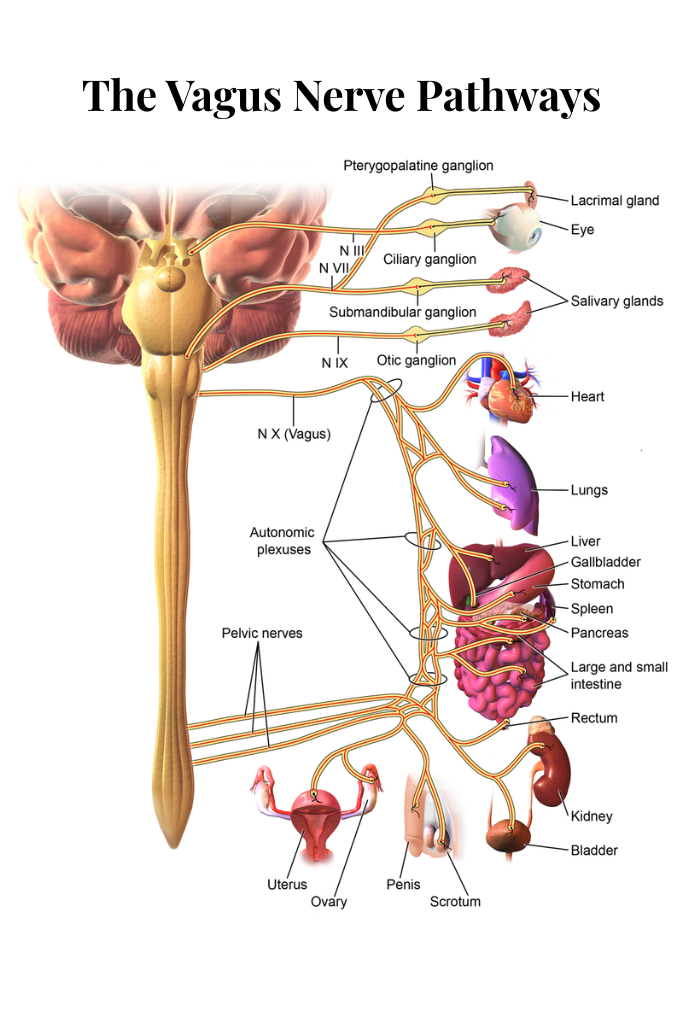

We don’t talk enough about the vagus nerve. Which makes it even more surprising because this quiet little powerhouse might just be the most important nerve in your body that you’ve never heard of.

It runs from your brainstem all the way down to your gut, touching your heart, lungs, liver, and nearly every major organ along the way. Like a master switchboard, it keeps the lines of communication open between your brain and body—especially when it comes to digestion, detox, mood, and hormones.

But here’s what I’ve learned: if we want real healing—not just symptom management—we have to work with the whole system. That includes not just the body, but the mind and spirit, too. The vagus nerve connects all three.

The bridge between systems

The vagus nerve is the anchor of your parasympathetic nervous system—your “rest and digest” setting. When it’s in functioning optimally, digestion flows. Hormones balance. Stress softens. Emotions settle.

It’s the bridge between how you feel emotionally, how your body functions physically, and how you show up energetically in the world.

I think of a client I’ll call Sarah. She came in with chronic bloating, irregular digestion, and hormone-related mood swings that left her feeling like a stranger to herself. The labs pointed to IBS and estrogen imbalance—but we both knew this wasn’t just about toxicity, diet or hormones. She felt stuck—physically, yes, but also emotionally and spiritually.

Her system wasn’t just inflamed—it was overwhelmed.

And the vagus nerve was caught in the middle.

What happens when vagal tone is low?

When this nerve isn’t firing correctly, nothing flows the way it should.

You may notice:

  • Constipation or sluggish digestion
  • Brain fog and emotional reactivity
  • Difficulty sleeping or feeling calm
  • Hormonal shifts that feel unpredictable
  • A sense of disconnection—from your body, your clarity, or even your purpose

These aren’t just physical symptoms. They’re signals. They’re the body’s way of saying: Something needs tending.

Healing from the inside out

I didn’t throw a complicated protocol at Sarah. We began with presence and partnership—supporting her nervous system to feel safe again.

She started with:

  • Gentle breathwork to bring her home to her body
  • Cold splashes to the face to reawaken her vagal tone
  • Daily humming or singing to soothe her system
  • Short nature walks to reconnect with Nature’s rhythms
  • A few weekly coffee enemas to open detox and clear the emotional weight held in the gut

And over time? Her digestion stabilized. Her mood softened. Her sleep deepened. But more than that—she started feeling like herself again. Present. Peaceful. Clear.

Because we weren’t just chasing symptoms. We were listening to her body’s wisdom—and giving the mind and spirit room to breathe.

The vagus nerve doesn’t shout. But when it’s supported, it quietly reweaves the threads of your system into something more whole.

This is the deeper work. It’s not about fixing one thing—it’s about restoring connection across all things.

Mind. Body. Spirit.

Let’s start there.

Love it? Share it!

  • Share on Facebook (Opens in new window) Facebook
  • Share on X (Opens in new window) X
  • Share on Pinterest (Opens in new window) Pinterest
  • Share on LinkedIn (Opens in new window) LinkedIn
  • Share on Tumblr (Opens in new window) Tumblr
  • Share on Reddit (Opens in new window) Reddit
  • Print (Opens in new window) Print
  • Email a link to a friend (Opens in new window) Email

Filed Under: Uncategorized

The Hidden Reason Your Health Protocol Isn’t Working

By cegan

Imagine this.

You show up to tour a new home. From the outside, it looked charming. But inside, the foundation is cracked. Mold creeps through the walls. The air smells wrong.

Would you hire a painter? An interior designer?

Or would you stop everything and fix what’s underneath first?

We chase supplements. Add hormones. Stack protocols.
Because we want relief—fast. Understandably so.

But if we don’t remove what’s breaking the body down, we’re just putting icing on a mud pie.

You can’t out-supplement toxicity.

Because the problem isn’t just one thing—it’s the way it stacks.

Glyphosate inhibits an enzyme called EPSPS, shutting down the shikimate pathway in your gut microbes. This one single disruption throws off microbiome balance, weakens immunity, and blocks the production of key nutrients the body needs for mental cognition and wellbeing. It also impairs CYP450 detox enzymes, which are essential for breaking down toxins, drugs, and hormones. This dual disruption, among other disruptions this toxin causes, contributes to a range of downstream diagnoses including IBS, SIBO, leaky gut, estrogen dominance, chronic fatigue, chemical sensitivity, and autoimmune conditions.

Radioactive elements—like uranium and radium—embed deep into bone and tissue, displace essential minerals, deplete your reserves, and generate oxidative stress that alters DNA methylation, disrupting gene expression and cellular repair. These changes have been associated with diagnoses such as osteopenia, anemia, thyroid disorders, mitochondrial dysfunction, and various forms of cancer, particularly of the bone, thyroid, and blood.

PFAS, the “forever chemicals,” integrate into your cell membranes and interfere with PPAR signaling—a master regulatory system that governs fat metabolism, inflammation, and hormonal balance. These chemicals don’t just pass through—they disrupt insulin sensitivity, alter thyroid function, and scramble the hormonal messages that regulate metabolism, reproduction, and cellular growth. This disruption has been linked to diagnoses such as hypothyroidism, PCOS, obesity, fatty liver disease, insulin resistance, and even certain hormone-driven cancers.

Each of these toxins affects multiple systems. But when they show up together?

Their impact isn’t just additive—it’s exponential.

This is what medical literature calls the cocktail effect: a layered, compounding burden where gut disruption weakens detox, impaired detox increases retention, and cellular confusion spreads system-wide. It’s not just one problem—it’s a full-body breakdown.

Together, they erode your body at a foundational level from every angle—breaking the body’s ability to repair, regulate, and respond.

And yet, instead of addressing this collapse, most protocols keep rearranging the furniture upstairs.

Any recommendation that bypasses root cause misses the mark. Any recommendation that isn’t grounded in the impact of environmental toxicity misses the path to true healing.

Healing starts where the damage begins: at the root, in the rubble, beneath the surface.

Remove the burden. Clear the poisons. Rebuild the foundation. Because when we remove what doesn’t belong, the body remembers how to heal.

This isn’t about treating symptoms.

It’s about reclaiming the whole house.

Love it? Share it!

  • Share on Facebook (Opens in new window) Facebook
  • Share on X (Opens in new window) X
  • Share on Pinterest (Opens in new window) Pinterest
  • Share on LinkedIn (Opens in new window) LinkedIn
  • Share on Tumblr (Opens in new window) Tumblr
  • Share on Reddit (Opens in new window) Reddit
  • Print (Opens in new window) Print
  • Email a link to a friend (Opens in new window) Email

Filed Under: Uncategorized

What is Sunshine? The Medicine of the Light

By cegan

This article is part of a three-part blog series called The Original Medicines, exploring the healing power of grounding, sunshine, and breath.

Even when the experts told us to stay out of the sun, I never listened. That advice never landed—not in my mind, and definitely not in my body. Sunshine always made me feel good—not just warm, but awesome. So, on some level, I knew this guidance was off.

Sure, it made sense to not bake ourselves all day and to avoid the harshest high-sun hours. But to block the sun entirely—whether by hiding indoors or slathering on chemical-laden sunscreens—never aligned with what I knew intuitively to be true. Sunshine was never the enemy. It was always a friend. A healer. A source.

The more I paid attention, the more I noticed that without sunshine, something dark creeps in. My sleep gets lighter. My energy dips. My mood flickers. It’s as if the sun holds me together in a way I can’t fully explain—but my cells seem to understand.

“A day without sunshine is like, you know, night.”
~Steve Martin

It makes you smile. It makes you feel good. But it’s also true. Sunshine isn’t optional. It’s fundamental.

How Sunshine Works

Sunlight is full-spectrum energy. It’s not just about vitamin D—though that matters. When light hits the skin and enters the eyes (without glass or sunglasses), it signals receptors that cue dozens of biological processes.

Dr. Alexander Wunsch, a leading voice in photobiology, reminds us that sunlight regulates our circadian rhythm, hormones, neurotransmitters, and cellular repair. Early morning light triggers cortisol (the good kind) to wake us up with clarity. Later, it helps our brain produce melatonin to wind us down.

Dr. Jack Kruse, a neurosurgeon turned quantum biologist, says it like this: “The sun is the most powerful drug we don’t have to pay for.” According to his work, natural light directly supports mitochondrial function—the engines of our cells. No sunlight? Those engines slow down. Chronic fatigue, inflammation, and hormone dysregulation follow.

Sunlight boosts serotonin, modulates immune function, and increases nitric oxide, which helps our blood vessels relax and circulate more freely. It even triggers the skin to produce sulfated vitamin D—a form we can’t replicate in a capsule.

This isn’t theory. It’s the intelligence of Nature.

Why Sunlight Matters More in a Toxic World

When the body is burdened with toxins, our regulatory systems—like immune response, detox pathways, and hormone signaling—start to misfire. Sunshine doesn’t just brighten our day. It recalibrates those systems.

Most of us now live under artificial light. Blue-heavy, spectrum-narrow, fluorescent. These lights keep us alert but disrupt our inner clock. They can’t mimic the complex array of wavelengths the sun delivers—especially the infrared and UVA rays that support healing and detoxification.

In a world of overstimulation and chemical overload, the sun is one of the purest forms of order. It brings rhythm back to chaos. It reminds the body what balance feels like.

Sunshine and the Slow Movement

The sun never rushes. It rises and sets with precision, not panic. In my own healing and slowing down journey, I started to sync with it—not as a schedule, but as a rhythm.

Stepping into the light each morning became a quiet ritual. My nervous system softened, and my mind stopped racing. Instead of swinging between overdrive and collapse, I felt steadier, like I could hold the pace I was meant for—not the one the world demanded.

Sunshine brings me back to myself.

Take the First Step

Wake with the sun. Let it hit your skin. Step outside for even just five minutes. Don’t bring your phone. Don’t overthink it. Just let the light find you.

And notice what shifts—not just in your energy, but in your whole way of being. The sun speaks a language older than words. Let your body remember how to listen.

As Hippocrates said, “Those who seek the sun find health in its warmth and light.”

The Original Medicines: A 3-Part Series
Part 1: What is Grounding?
Part 2: What is Sunshine?
Part 3: What is Breath?

Love it? Share it!

  • Share on Facebook (Opens in new window) Facebook
  • Share on X (Opens in new window) X
  • Share on Pinterest (Opens in new window) Pinterest
  • Share on LinkedIn (Opens in new window) LinkedIn
  • Share on Tumblr (Opens in new window) Tumblr
  • Share on Reddit (Opens in new window) Reddit
  • Print (Opens in new window) Print
  • Email a link to a friend (Opens in new window) Email

Filed Under: Uncategorized

What Is Breath? Remembering the Rhythm Within

By cegan

This article is part of a three-part blog series called The Original Medicines, exploring the healing power of grounding, sunshine, and breath.

I think I always knew I wasn’t breathing correctly. I just didn’t know how much it was costing me.

For years, I lived in stress mode—my breath was shallow, tight, rushed. I knew it wasn’t good, but it had become so normal I didn’t question it. Until I started paying attention. Thich Nhat Hanh wrote, “Feelings come and go like clouds in a windy sky. Conscious breathing is my anchor.” That’s when something clicked.

I began to slow down. Three deep breaths. That was all it took to feel the first wave of calm wash over my body.

Later, I read a quote from Byron Katie that undid me, in her book Loving What Is. She said, “One day I noticed that I wasn’t breathing—I was being breathed.” And when I dropped down with my breathwork, I realized I too wasn’t doing the breathing; I was being breathed. Whoah.

How Breath Works

We take around 20,000 breaths a day, and most of them happen on autopilot. But breath isn’t just background noise—it’s data. It’s rhythm. It’s a direct line to your nervous system.

James Nestor, author of Breath, says it so well: “The way we breathe affects the size and function of our lungs, the pH of our blood, and the balance of our nervous system.” Shallow mouth breathing triggers stress hormones and raises inflammation. But slow, nasal breathing—especially through the diaphragm—signals safety to the body. It turns down the fight-or-flight switch. It helps the body heal.

Anders Olsson, founder of Conscious Breathing, says it this way: “You can survive for days without water, weeks without food, but only minutes without breath. And yet we rarely consider how we breathe.” He’s right. I discovered nose breathing later in life—and when I did, everything changed. My sleep deepened. My energy became more stable. My body felt less reactive.

Breath, like grounding and sunshine, regulates everything: immune function, detox, hormones, digestion, clarity. It’s not just air. It’s instruction.

Why Breath Matters More in a Toxic World

In a world full of chemicals, chaos, and chronic stress, breath is your on-demand regulator. When toxins accumulate, they throw off your oxygen balance, nervous system tone, and cellular metabolism. Breath is the one system you can control to pull everything back into alignment.

Slow nasal breathing increases nitric oxide—an anti-inflammatory gas that opens the airways and improves blood flow. Diaphragmatic breathing stimulates the vagus nerve, calming the brain and improving digestion. It also supports the lymphatic system, helping move toxins out.

And perhaps most profoundly, breath gives you access to your inner life. It shows you where you’re holding, where you’re rushing, where you’ve disconnected from yourself.

Breath and the Slow Movement

When my breath drops down—really drops down—my body follows. My nervous system softens. My mind clears. And sometimes, I cry.

It’s not because I’m sad. It’s because I’m home within myself.

Breath has become one of the most spiritual tools in my life. It doesn’t belong to any philosophy or practice. It’s universal. As Tara Brach says, “Breath is the portal to presence.”

When I breathe deeply, when I get out into the sun, and when I spend time in nature and on the ground, something shifts. I’m no longer chasing the day. I’m remembering who I am.

Sunshine brings me back to myself. It always has.

Take the First Step

Breathe through your nose. Slowly. Try four seconds in, six seconds out. Do it three times. No technique. No perfection. Just presence.

Feel what shifts. Notice what softens. This is the original medicine that’s been with you since the beginning.

Grounding steadies you. Sunshine nourishes you.
But breath? Breath brings you back to yourself.

Grounded, lit, and now—awake. These three practices aren’t separate. Together, they remind your body how to heal.

The Original Medicines: A 3-Part Series
Part 1: What is Grounding?
Part 2: What is Sunshine?
Part 3: What is Breath?

Love it? Share it!

  • Share on Facebook (Opens in new window) Facebook
  • Share on X (Opens in new window) X
  • Share on Pinterest (Opens in new window) Pinterest
  • Share on LinkedIn (Opens in new window) LinkedIn
  • Share on Tumblr (Opens in new window) Tumblr
  • Share on Reddit (Opens in new window) Reddit
  • Print (Opens in new window) Print
  • Email a link to a friend (Opens in new window) Email

Filed Under: Uncategorized

What is Grounding? Introduction to Earth’s Healing Energy

By cegan

This article is part of a three-part blog series called The Original Medicines, exploring the healing power of grounding, sunshine, and breath.

I remember hearing about “tree-hugging” as a kid—it sounded like a joke, something silly. Then, during the early months of the pandemic, a friend and I were talking about energy—the kind you can’t see but can feel. Deep in the woods one day, I wrapped my arms around a tree, pressed my body against it, and stood still. That’s when something shifted.

I didn’t expect anything. Yet, I felt everything.

It was as if the tree charged me, correcting a subtle off-kilter feeling and bringing me back into balance. I experienced strength, calm, and a connection to something older and wiser than myself.

Dr. Laura Koniver, a physician who has studied grounding for over a decade, describes it as the transfer of Earth’s natural energy—what some call scalar energy—into our bodies. The Earth pulses with free electrons that our bodies crave. When we make direct contact with the Earth, these electrons neutralize free radicals, settle inflammation, and recalibrate our internal systems. We’re not imagining the recharge—we’re wired to receive it.

During the pandemic, when yoga studios, coffee shops, and community spaces were either closed or overcrowded, nature became my sanctuary. My love for it deepened, and it anchored me. I started noticing details I’d overlooked before: the texture of bark, the interplay of light, and the slow, deliberate wisdom of a forest that exists simply to be.

As Peter Wohlleben writes in The Hidden Life of Trees, “A tree can be only as strong as the forest that surrounds it.” It struck me that we’re much the same. Grounding became my way back to the forest—a return to a state I hadn’t known I’d lost.

How Grounding Works

Grounding isn’t just a feel-good ritual—it’s backed by science. The Earth carries a negative charge and supplies free electrons. When our bare skin touches the ground, these electrons flow into us, neutralizing free radicals and reducing inflammation. Research by Clint Ober, Dr. Gaétan Chevalier, and Dr. Laura Koniver demonstrates that grounding restores the body’s natural electrical state. It’s like hitting the reset button on chronic inflammation and oxidative stress—two key drivers of aging and disease.

The Earth’s electrons don’t only support physical healing; they also influence the vagus nerve, the master switch of the parasympathetic nervous system. By calming the nervous system, grounding promotes the deep, restorative healing that our overstimulated lives so desperately need.

Why Reducing Inflammation and Calming the Nervous System Matters

In today’s toxic world, chronic inflammation has become the norm. Inflammation is the body’s natural response to threats, but when it never turns off, it disrupts every system—immune, hormonal, neurological, and more. Chronic inflammation is like a wildfire, burning through our resources and preventing true healing.

As Clint Ober often emphasizes, grounding is one of the most accessible and effective anti-inflammatory tools available. It not only reduces inflammation but also calms the nervous system. In our perpetual fight-or-flight mode, the body prioritizes survival over healing. Grounding shifts us into a parasympathetic state—the rest-and-digest mode—where detoxification, cellular repair, deep healing, and inner calm can finally occur.

Grounding, Detoxification, and Chronic Conditions

In our fast-paced, productivity-obsessed world, grounding invites us to slow down—literally and metaphorically. Studies show that grounding normalizes cortisol rhythms, reducing pain and inflammation, which are major contributors to chronic illness. Its influence on blood chemistry and mineral metabolism offers a natural approach to managing conditions like osteoporosis and diabetes, and it has even been linked to supporting thyroid function and improving blood glucose regulation.

What makes grounding so effective is its unique mechanism. When you connect with the Earth’s frequency, electrons penetrate cell membranes, optimizing the electrical charge inside and out. This enhanced stability improves the function of ion channels—those tiny gateways regulating mineral and electrolyte flow. With better cellular precision and resilience, mitochondria work more efficiently, boosting energy production, waste clearance, and overall vitality. Grounding doesn’t just support healing—it lays the foundation for sustained biological renewal.

As Wohlleben reminds us, “In the forest, nothing stands alone.” Neither do we.

Why Grounding Matters

Grounding isn’t a luxury—it’s a necessity. It’s the reset button we all need. Beyond physical healing, grounding reconnects us with nature and helps us live well. It lowers cortisol, improves sleep, and enhances blood flow. It’s a pause that allows you to breathe deeply and regain your footing. When you connect with the Earth, you aren’t merely stopping; you’re beginning anew—opening the door to well-being and the start of genuine healing.

Take the First Step

Hug a tree, kick off your shoes, touch the Earth, and feel the shift. Notice how the world becomes more grounded, how life becomes easier. This is just the beginning of exploring the power of grounding. In my next post, I’ll dive into another post on grounding and sunshine.

As Laura Koniver M.D. says, “Grounding reconnects you to the most essential rhythm—the one that never stopped holding you.”

The Original Medicines: A 3-Part Series
Part 1: What is Grounding?
Part 2: What is Sunshine?
Part 3: What is Breath? 

Love it? Share it!

  • Share on Facebook (Opens in new window) Facebook
  • Share on X (Opens in new window) X
  • Share on Pinterest (Opens in new window) Pinterest
  • Share on LinkedIn (Opens in new window) LinkedIn
  • Share on Tumblr (Opens in new window) Tumblr
  • Share on Reddit (Opens in new window) Reddit
  • Print (Opens in new window) Print
  • Email a link to a friend (Opens in new window) Email

Filed Under: Uncategorized

Why We Sabotage Our Own Health (And How to Fix It)

By cegan

Tell someone to eat better, exercise more, or get some sleep, and what happens? They’ll nod, agree… and then do the opposite. Not because they don’t know better, but because habits are stronger than knowledge.

It’s human nature. We resist being told what to do—even when it’s for our own good. It’s why gym memberships spike in January and collect dust by March. It’s why we reach for sugar when we’re stressed, even though we know it’s the last thing our body needs.

So what’s the move? Surround yourself with the right people.

Want to be healthier? Be around people who make health non-negotiable. Want to be more disciplined? Spend time with those who walk their talk. Want more energy? Hang with people who prioritize rest, movement, and real food. Strength grows in proximity to strength.

A wrestler doesn’t train with someone weaker. They train with someone stronger. That’s how they level up.

So here’s the mic-drop: Your health is a reflection of the company you keep. Choose wisely.

Love it? Share it!

  • Share on Facebook (Opens in new window) Facebook
  • Share on X (Opens in new window) X
  • Share on Pinterest (Opens in new window) Pinterest
  • Share on LinkedIn (Opens in new window) LinkedIn
  • Share on Tumblr (Opens in new window) Tumblr
  • Share on Reddit (Opens in new window) Reddit
  • Print (Opens in new window) Print
  • Email a link to a friend (Opens in new window) Email

Filed Under: Uncategorized

  • « Previous Page
  • 1
  • 2
  • 3
  • 4
  • 5
  • …
  • 35
  • Next Page »

Search & You Shall Find

Topics

  • Environmental Toxins
  • Gut Issues & Bloating
  • Headaches, Brain Fog & Focus
  • Health Hacks
  • Mind-Body-Spirit Connection
  • Protein and Real Food Nutrition
  • Recipes
  • Root Cause
  • Start Here
  • Success Stories

DOWNLOAD YOUR FREE GUIDE

GET ON THE WAITLIST NOW!

FREE DETOX TIPS IN YOUR INBOX

As Seen In:

Forbes Huffington Post Better Connecticut Bella Mia Magazine Boston News Network Blog Talk Radio

Carol Egan – Heal Your Digestion to Heal Your Life

  • Facebook
  • Pinterest
  • Twitter

Let’s Talk About Health

I work with accomplished professionals who want to look and feel as healthy as they are successful. They spent years prioritizing success over health, and are now troubled by excess weight, exhaustion, and foggy thinking at work and home. I help them take control of their health, so they can focus on what matters in their life and career.

Schedule Your Call

Copyright © 2026 by Carol Egan · Privacy Policy · Disclaimer· Terms and Conditions