Carol Egan

  • About
  • Detox Tools
  • Speaking
  • Coaching
  • Results
  • Articles
  • Resources
  • Shop
  • Contact

What’s Standing in Your Brain’s Way?

By cegan

Your brain isn’t lazy, and it isn’t broken. It’s doing its job every second of every day, keeping you focused, creative, and alive. But there’s a problem: it’s working in a world that wasn’t built to protect it.

Every day, toxins show up. In the air, the food, the water—even the devices you hold in your hand. They don’t just drift by; they seep in. They disrupt the systems your brain depends on, causing inflammation and stealing the energy your cells need to keep you sharp.

And slowly, those small disruptions add up.

The Barrier That’s Letting Things In

Your brain has a built-in defense system: the blood-brain barrier. Think of it as a filter, keeping harmful invaders out. But toxins—pesticides, heavy metals, even electromagnetic fields from WiFi—have a way of breaking through.

Once they’re in, the chain reaction begins:

  • Inflammation spreads, disrupting communication in the brain.
  • Energy production slows as toxins target your mitochondria, the tiny engines powering every cell.
  • And critical brain messengers—like dopamine and serotonin—fall out of balance.

You might not notice it at first. It starts with brain fog, fatigue, or a little forgetfulness. But if the pattern continues, the symptoms grow louder.

It’s All Connected

What happens in your gut doesn’t stay in your gut. Your brain and gut are in constant communication, working together to keep you healthy. But when toxins disrupt the balance in your gut microbiome—the bacteria that keep your system running smoothly—problems begin.

Inflammation starts in the gut and doesn’t stop there. It travels through your body, weakening the blood-brain barrier and making it easier for harmful substances to reach your brain. It’s not just about digestion anymore. It’s about how you think, how you feel, and how well your brain performs.

A Simple Path Forward

Your brain doesn’t need saving—it needs support. It needs you to create the conditions for it to thrive.

  • Protect your gut. The balance of bacteria in your microbiome is a foundation for brain health.
  • Rest deeply. During sleep, your brain clears out waste and toxins—an essential reset that keeps your thinking clear.
  • Pay attention. If something feels off—fatigue, anxiety, forgetfulness—your body is sending you a message.

Small steps can lead to big changes. Start with what’s within your control. Remove what doesn’t belong, restore what does, and notice how your brain responds.

The Work Ahead

Your brain is your greatest asset. It’s where your ideas are born, where your creativity takes shape, where your life happens.

But like anything precious, it needs care. When you clear the obstacles—one by one—you create space for clarity, focus, and energy to return.

This isn’t about overhauling everything overnight. It’s about small, thoughtful shifts that help your brain—and your life—work better.

Are you ready to begin?

Love it? Share it!

  • Share on Facebook (Opens in new window) Facebook
  • Share on X (Opens in new window) X
  • Share on Pinterest (Opens in new window) Pinterest
  • Share on LinkedIn (Opens in new window) LinkedIn
  • Share on Tumblr (Opens in new window) Tumblr
  • Share on Reddit (Opens in new window) Reddit
  • Print (Opens in new window) Print
  • Email a link to a friend (Opens in new window) Email

Filed Under: Uncategorized

Why Food Debates Are Short-Sighted

By cegan

We love certainty. We love to categorize, label, and defend. Vegan vs. carnivore. Keto vs. high-carb. Every camp has its champions, its research, its long-winded arguments about why this way is the right way.

But let’s be real: if there were a single, universal diet that worked for everyone, wouldn’t we have figured it out by now? Wouldn’t we all be thriving?

Instead, most of us are inflamed, exhausted, and confused—following rules that should work but don’t. Maybe it’s time we step back from the noise and start listening to the only expert that actually matters: our own body.

Food Isn’t a Religion—It’s Fuel

Here’s where we get stuck: we treat food like an ideology. A belief system. A badge of identity.

But food isn’t about belief—it’s about function. Your body is an engine, and food is the fuel that runs it. The right fuel makes it run smoothly. The wrong fuel? It gums up the system, slows you down, and leads to chronic issues you can’t quite put your finger on.

And yet, we continue to follow dietary rules written by people who have no idea how your body responds to food.

Inflammation: The Root of the Problem

If we strip away all the diet wars and nutrition dogma, one thing is clear: chronic inflammation is wrecking us.

We live in an inflammatory world. The air we breathe, the water we drink, the stress we carry—it’s all adding to the load. And food? Food is either helping or making it worse.

Some people handle carbs well. Others don’t. Some thrive on dairy. Others experience bloating and fatigue. Some people feel incredible on plant-based diets. Others feel depleted.

The common denominator? Inflammation. The goal isn’t to follow someone else’s perfect diet; it’s to identify and eliminate the foods that are keeping you inflamed.

I Followed the Rules—And Still Struggled

For years, I drank 32 ounces of green juice every day and adhered to a strict vegan diet. This was what the camp I was in said was best. It was supposed to be detoxifying, energizing, the ultimate way to fuel my body.

But I didn’t feel best.

I was still struggling. My energy wasn’t where it should have been. My body was sending me signals that something was off. And yet, I ignored it—because I believed I was eating the “right” way.

Eventually, I had to step back and ask a simple but powerful question: What if this isn’t right for me?

That question changed everything.

I started experimenting. I added in foods I had once sworn off. I paid attention to how my body actually felt rather than how I thought it should feel. And over time, I found what worked—not based on someone else’s blueprint, but on my own lived experience.

Food as an Experiment—Not a Rulebook

We’ve been conditioned to follow diets like rigid roadmaps as if there’s one golden path to health. But what if, instead of blindly following, we experimented?

What if we treated food as a science experiment, with only one real metric: How do I feel?

Not how someone on the internet says you should feel. Not how your diet app ranks your meal choices. Not what a study says is optimal for the general population.

Just this: What happens in your body when you eat this food?

That’s the game-changer. That’s where freedom starts.

The Best Diet? The One That Works for You

There’s no perfect diet. No universal answer. No one-size-fits-all roadmap.

Instead of looking for a label to define your way of eating, consider this:

  • Does this food reduce or increase inflammation in my body?
  • How do I actually feel after eating it?
  • Am I energized and clear-headed, or bloated and tired?
  • Is this way of eating sustainable for me in the long run?

Most of us aren’t struggling because we lack willpower. We’re struggling because we’re eating in a way that doesn’t work for our individual bodies. And instead of adjusting, we double down because “the book said so.”

Forget the rules. Forget the debates. Your body has the answer—if you’re willing to listen.

A Simple Shift

No rigid rules. No one-size-fits-all plan. No pressure to get it “right.”

Just this:

Notice what your body is telling you.
Try something different if what you’re doing isn’t working.
Let go of the guilt.
Trust yourself.

Because in the end, the best expert for your body—is you.

Now, what’s one food that you suspect isn’t serving you? Try cutting it out for a week and see what happens. You might be surprised at what your body tells you.

Love it? Share it!

  • Share on Facebook (Opens in new window) Facebook
  • Share on X (Opens in new window) X
  • Share on Pinterest (Opens in new window) Pinterest
  • Share on LinkedIn (Opens in new window) LinkedIn
  • Share on Tumblr (Opens in new window) Tumblr
  • Share on Reddit (Opens in new window) Reddit
  • Print (Opens in new window) Print
  • Email a link to a friend (Opens in new window) Email

Filed Under: Uncategorized

Your Body Knows. But Are You Listening?

By cegan

Inflammation is the villain.

Not just sugar. Not just toxins. Not just pesticides or plastics or seed oils. The real problem is all of it, all at once. The relentless overload that keeps your body in a constant state of defense.

And your liver? It’s the one fighting the battle. Every second, it’s sorting through the chemicals, breaking down the excess, trying to keep you from drowning in what modern life keeps throwing at you.

But here’s the thing: your liver is not an unlimited resource.

At some point, it gets overwhelmed. It slows down. And then? The backlog starts. Fatigue. Brain fog. Stubborn weight. Mood swings. Hormones out of control. Not because you’re “getting older” or because your metabolism “isn’t what it used to be.”

Because the system is clogged.

And here’s where most people get it wrong.

Fasting Is a Tool, Not a Magic Trick

Fasting works. Not because it’s trendy, but because it’s biology.

When you stop eating, your body stops digesting long enough to do something very important: clean house. It clears out damaged cells. It burns through stored junk. It lets the liver catch up. It resets your insulin. It reduces inflammation.

It’s simple. It’s powerful. It’s built into how we’re designed.

But here’s the catch: if your body is already overloaded, fasting can make things worse before it makes them better.

Because fasting mobilizes toxins.

If your system isn’t eliminating properly—if your gut isn’t moving, if your liver is sluggish, if your drainage pathways are slow—those toxins don’t leave. They recirculate. And suddenly, the thing that’s supposed to heal you is making you feel awful.

Not because fasting is bad. But because your body wasn’t ready for it.

So, Should You Fast or Detox First?

That’s the wrong question.

The right question is: What does my body need right now?

Some people can fast today and feel amazing. Others need to clear the backlog first. If fasting gives you energy, sharpness, clarity—your body is handling it well. Keep going.

If fasting makes you feel sluggish, foggy, drained? Your body is telling you something. Listen. Don’t force it. Fix the foundation first—support the liver, get the gut moving, open up elimination channels. Then fasting stops being a struggle and starts being a tool.

The One Truth No One Can Tell You

You don’t need another plan. Another expert. Another diet.

You need to pay attention.

Your body is talking. Every symptom is feedback. Every ounce of fatigue, every craving, every reaction to food—it’s all information. The question isn’t should I fast? or should I detox first?

The question is: What is my body asking for right now?

No book, no protocol, no influencer knows better than you.

Trust it. It already knows the way forward.

Love it? Share it!

  • Share on Facebook (Opens in new window) Facebook
  • Share on X (Opens in new window) X
  • Share on Pinterest (Opens in new window) Pinterest
  • Share on LinkedIn (Opens in new window) LinkedIn
  • Share on Tumblr (Opens in new window) Tumblr
  • Share on Reddit (Opens in new window) Reddit
  • Print (Opens in new window) Print
  • Email a link to a friend (Opens in new window) Email

Filed Under: Uncategorized

Take the Shot. Nature Does the Rest.

By cegan

Ever wake up feeling sluggish, foggy, or just off? Nature had an answer for us long before we asked.
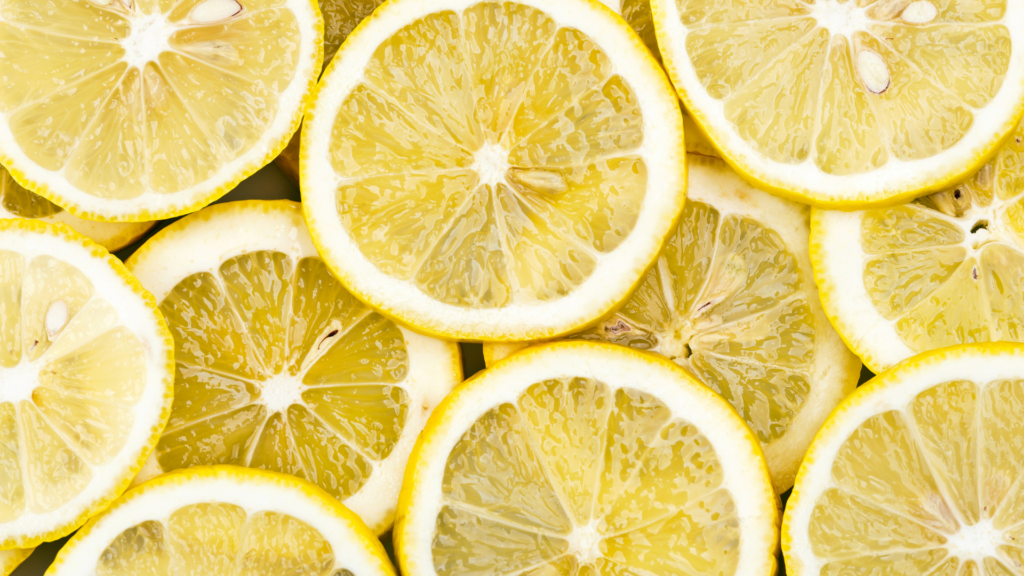
Turmeric, ginger, and lemon—three simple ingredients you’ve walked past a hundred times. They hold real power to reset your body.

For centuries, Ayurveda and Traditional Chinese Medicine healers knew what modern science now proves. Turmeric reduces inflammation, helping your liver break down and remove toxins. Ginger aids digestion, relieving bloating and that heavy, sluggish feeling. Lemon detoxifies, boosts hydration, and enhances your liver’s ability to filter out waste.

Together, they’re more than a wellness drink. They’re a ritual—a small, powerful choice that sets the tone for your day.

Wellness is simple. Take the shot and let nature do the rest.

Turmeric-Ginger Liver Detox Shot

(Recommended first thing in the morning)

Ingredients:

  • 1 teaspoon fresh turmeric juice
  • 1 teaspoon fresh ginger juice
  • Juice of ½-1 lemon
  • A pinch of freshly ground black pepper

Instructions:

  1. In a glass, combine the turmeric and ginger juice
  2. Squeeze in the juice of a half or whole lemon
  3. Add a pinch of black pepper to enhance turmeric absorption.
  4. Drink immediately on an empty stomach for the best detox benefits.

Optional Tips:

  • If the taste is too strong, add a teaspoon of raw honey or a splash of fresh orange juice.
  • For an extra boost, toss in a pinch of cayenne pepper.

Why It Works:

  • Turmeric reduces inflammation and supports liver detox.
  • Ginger aids digestion and helps reduce bloating.
  • Lemon hydrates and revitalizes, assisting the liver in clearing out toxins.
  • Black pepper boosts the bioavailability of curcumin, the active compound in turmeric.

Cheers!

Love it? Share it!

  • Share on Facebook (Opens in new window) Facebook
  • Share on X (Opens in new window) X
  • Share on Pinterest (Opens in new window) Pinterest
  • Share on LinkedIn (Opens in new window) LinkedIn
  • Share on Tumblr (Opens in new window) Tumblr
  • Share on Reddit (Opens in new window) Reddit
  • Print (Opens in new window) Print
  • Email a link to a friend (Opens in new window) Email

Filed Under: Uncategorized

Keto Raw Celery and Fresh Herb Salad with Citrus Dressing 

By cegan

A Refreshing, Keto-Friendly Salad Bursting with Fresh Herbs and Citrus Vibes

Feeling heavy, stagnant, or just off? This isn’t just a salad—it’s a reset button.
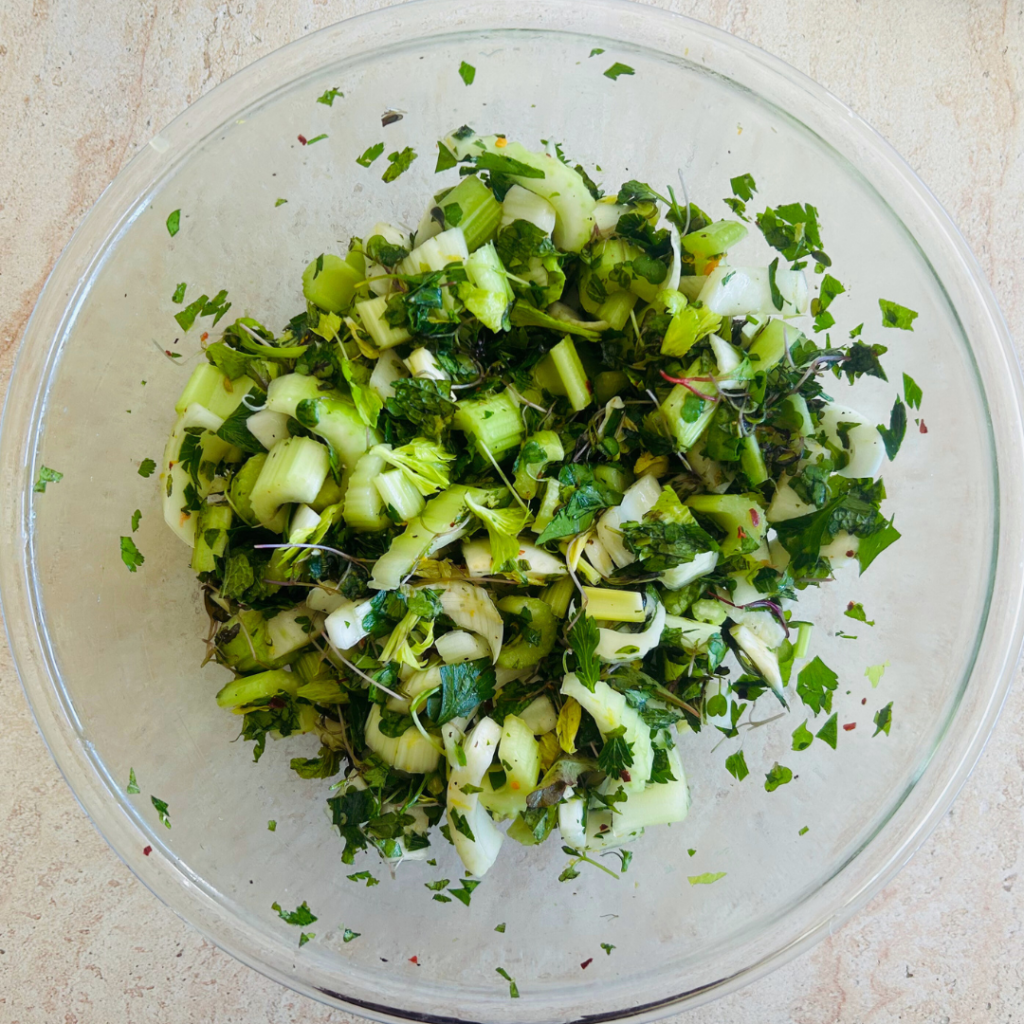
Celery hydrates and gently cleanses with essential minerals like potassium and magnesium. Parsley brings vitamins A, C, and K, plus iron and folate to support immunity, bones, and red blood cells. Mint cools and soothes, helping digestion by easing bloating and relaxing the gut. Fennel offers natural prebiotics, nourishing beneficial bacteria. Avocado’s healthy fats make sure your body absorbs all the nutrients in this bowl. Microgreens, tiny but powerful, deliver concentrated vitamins and antioxidants. Citrus brightens and supports natural alkalinity, keeping your body’s pH balanced for optimal enzyme function. Aleppo pepper adds warmth and boosts circulation. This salad isn’t just fuel—it’s a fresh start. Nature knows. Your body responds.

Ingredients:

For the Salad:

  • 6-8 celery stalks, thinly sliced on a bias
  • 1 cup fresh parsley leaves
  • 1 cup fresh mint leaves
  • 1 small fennel bulb, thinly sliced (optional)
  • 1 medium avocado, diced
  • 1 cup microgreens (like pea shoots or radish sprouts)
  • 1/2 teaspoon Aleppo pepper (or a pinch of red pepper flakes)

For the Citrus Dressing:

  • Zest and juice of 1 lemon
  • Zest and juice of 1/2 orange
  • 1 tablespoon extra-virgin olive oil
  • 1 tablespoon white wine vinegar
  • 1 teaspoon monk fruit sweetener (or your preferred keto-friendly sweetener)
  • Sea salt and freshly cracked black pepper, to taste

Instructions:

  • Build the Salad: Combine celery, parsley, mint, fennel, avocado, and microgreens in a large bowl.
  • Make the Dressing: Whisk together citrus zest and juices, olive oil, vinegar, sweetener, salt, and pepper until smooth.
  • Bring It Together: Pour the dressing over the salad and toss gently. Sprinkle with Aleppo pepper for a bit of warmth.
  • Serve Right Away: Freshness is the key. Enjoy it immediately for the best crunch and flavor.

Tips for the Perfect Salad:

  • If you prefer a bit of extra crunch, add a few toasted seeds like sunflower or hemp seeds (keeping it keto-friendly).
  • Pair this salad with grilled chicken or shrimp for a complete meal.
  • For more vibrant color, garnish with additional citrus zest just before serving.

Enjoy the Freshness!

This isn’t just about eating well—it’s about feeling good. Whether you make this salad as a light lunch or a vibrant side, it’s a simple way to reconnect with Nature, all it provides, and what your body truly needs. If you try it, I’d love to hear—did it feel like a reset?

Love it? Share it!

  • Share on Facebook (Opens in new window) Facebook
  • Share on X (Opens in new window) X
  • Share on Pinterest (Opens in new window) Pinterest
  • Share on LinkedIn (Opens in new window) LinkedIn
  • Share on Tumblr (Opens in new window) Tumblr
  • Share on Reddit (Opens in new window) Reddit
  • Print (Opens in new window) Print
  • Email a link to a friend (Opens in new window) Email

Filed Under: Uncategorized

Hunger Pangs or Habit Echoes?

By cegan

Overconsumption is a quiet thief. It often goes unnoticed because so many of us do it. It blends into the background noise of our lives—something normal, yet it quietly erodes our clarity and weakens our inner strength.



I’ve been thinking about this a lot lately. After transitioning off thyroid medication, I found myself navigating a maze of hormonal imbalances, unexpected weight gain, and a metabolism that seemed to flat-out stall. My liver was struggling to keep up with the shifts in my biochemistry, and for the first time in my life, I started looking at everything I ate in new ways—not with guilt, but with curiosity.

Am I really hungry?

Nine times out of ten, when I paused long enough to ask the question, the answer was no. I’d find myself eating something you’d never find me eating in the past, not even sure how I ended up there. I started to notice more than ever how conditioned thoughts can drive us if we don’t pay attention—’It’s morning, I should eat breakfast.’ Or, ‘I’ve had a long day; I deserve this treat.’

What I’m discovering is that overeating isn’t really about food. It’s about the stories we tell ourselves. The story that food will fix fatigue, that a treat will soothe stress, or that a meal will fill some hole of need. And these stories? They quietly undermine what we intuitively know is best for us.

Research backs this up. Studies in esteemed journals like PubMed and ScienceDirect show that overeating, particularly with highly processed foods that are high in empty calories and low in nutrients, can lead to chronic conditions like heart disease, type 2 diabetes, and metabolic syndrome. It also disrupts brain chemistry, creating cravings that aren’t real hunger but echoes of old habit energy. And here’s an interesting twist: chronic overeating can lead to a kind of apathy—a numbed motivation and zest for life. It’s as if excess food weighs down not just the body but also the spirit. As spiritual teacher and philosopher Omraam Mikhael Aivanhov said, “When you eat too much, you exhaust your organism. You not only overload your stomach, but you also darken your soul.” It’s as if excess food weighs down not just the body but also the spirit.

In the wild, animals don’t do this. Research into animal behavior shows that most species naturally regulate their food intake. They eat to live, not the other way around. Unlike humans, they haven’t invented chefs or become ‘foodies’ to turn food into a source of constant temptation. They eat when they’re hungry, stop when they’re full, and go back to active living. But here’s where my curiosity kicks in—animals also demonstrate advanced survival intelligence by self-medicating with specific plants or substances to combat illness, improve health, and manage their environment. So, why do they have such discipline around food when, as humans, we often struggle with it?

When we slow down long enough to ask, ‘Do I really need this?’—whether it’s a meal, a snack, or a treat—we create a moment of clarity. It’s a chance to rewrite the story. To realize that what we often crave isn’t food at all—it’s presence, it’s a pause, it’s a breath. Michael Singer, author of The Untethered Soul and spiritual teacher, captures it well: “The truth is, you could eat once a day, or ten times a day, and still not satisfy the hunger inside. This is because the hunger is not for food, but for fullness, for wholeness.”

So, what if this isn’t about restriction at all? What if it’s an experiment—a chance to let a little hunger linger, not as punishment, but as an invitation to get curious about what we really need? Maybe, just maybe, it’s not more food, but more connection—to ourselves and to life itself.

Love it? Share it!

  • Share on Facebook (Opens in new window) Facebook
  • Share on X (Opens in new window) X
  • Share on Pinterest (Opens in new window) Pinterest
  • Share on LinkedIn (Opens in new window) LinkedIn
  • Share on Tumblr (Opens in new window) Tumblr
  • Share on Reddit (Opens in new window) Reddit
  • Print (Opens in new window) Print
  • Email a link to a friend (Opens in new window) Email

Filed Under: Uncategorized

Beyond Limits: The Mind’s True Power

By cegan

What if the only thing standing between you and what you most want is the story you keep telling yourself?

We so often underestimate the power of our minds. We throw around phrases like “I can’t” or “That’s not possible,” as if our potential were a fixed point rather than an ever-evolving edge. But the truth is, the mind is the architect of our reality, and it listens closely to the words we feed it.

Take fasting. Sure, it’s about food, but it’s not; it’s really about resilience. It’s about peeling back layers of comfort to find the strength beneath. The mind then learns that suffering is not a requirement—it’s a choice. It realizes that the body can become impervious to the chaos outside because the calm within is so deeply rooted.

The real victory is not in conquering the world but in conquering ourselves. What might happen if you stopped negotiating with your limitations and started challenging them instead?

Because your mind is ready, it always has been.

Love it? Share it!

  • Share on Facebook (Opens in new window) Facebook
  • Share on X (Opens in new window) X
  • Share on Pinterest (Opens in new window) Pinterest
  • Share on LinkedIn (Opens in new window) LinkedIn
  • Share on Tumblr (Opens in new window) Tumblr
  • Share on Reddit (Opens in new window) Reddit
  • Print (Opens in new window) Print
  • Email a link to a friend (Opens in new window) Email

Filed Under: Uncategorized

Simple, Crunchy, and Creamy: Your New Go-To Vegan Caesar

By cegan

Gluten-free, dairy-free, packed with crunch, flavor, and bold flavor.

This isn’t just a salad. It’s a masterclass in plant-based magic. A Caesar that keeps everything you love—the creamy dressing, the briny depth, the satisfying crunch—but makes it smarter, fresher, easier… and completely gluten and dairy-free.

Cheers to something unforgettable!

Ingredients

For the Hummus-Based Vegan Caesar Dressing:

  • ½ cup hummus (store-bought or homemade—see recipe below)
  • 2 tbsp lemon juice (freshly squeezed, no bottled shortcuts)
  • 1 tbsp Dijon mustard (adds bite & depth)
  • 1 tbsp capers, finely chopped (briny magic)
  • 1 tbsp nutritional yeast (umami powerhouse)
  • 1 small garlic clove, minced (essential Caesar flavor)
  • 1 tbsp extra virgin olive oil (for richness)
  • 1 tsp vegan Worcestershire sauce
  • 1 tsp miso paste (white or chickpea, for deeper umami)
  • ½ tsp smoked paprika (optional, but adds warmth)
  • 1 tbsp aquafaba (from canned chickpeas, for silkiness)
  • 1 tsp apple cider vinegar (mimics Parmesan’s sharpness)
  • ½ tsp salt
  • ½ tsp black pepper
  • 1–2 tbsp water (to thin, if needed)

For the Greens:

  • 1 head romaine lettuce, chopped
  • 1 bunch lacinato kale, thinly sliced & massaged with a little lemon juice
  • 1 cup shaved Brussels sprouts (optional, but amazing)

For the Crunch (Choose One or Both):

Option 1: Toasted Chickpeas

  • 1 cup canned chickpeas, patted dry
  • 1 tbsp olive oil
  • ½ tsp salt
  • ½ tsp smoked paprika or garlic powder

Roast at 400°F for 20–25 minutes, shaking halfway. Crispy, golden perfection.

Option 2: Almond “Parm” Crumble

  • ½ cup almonds
  • 1 tbsp nutritional yeast
  • ½ tsp garlic powder
  • Pinch of salt

Pulse in a food processor until crumbly. Nutty, cheesy, ridiculously good.

Extras (Optional, but Highly Recommended)

  • ¼ cup marinated caper berries (briny flavor bombs)
  • ¼ cup thinly shaved red onion (adds a little bite)
  • 1 avocado, sliced (for creamy contrast)
  • ¼ cup pumpkin seeds (for more crunch & depth)

Instructions

Step 1: Make the Dressing

  1. In a bowl, whisk together the hummus, lemon juice, Dijon mustard, capers, nutritional yeast, garlic, olive oil, Worcestershire, miso, smoked paprika, aquafaba, and apple cider vinegar.
  2. Taste. Adjust salt, lemon, or umami to your liking.
  3. Add water, a tablespoon at a time, until you reach a creamy but pourable consistency.
  4. Let it sit for 15 minutes (if you have the patience). The flavors get even better.

Step 2: Prepare the Greens

  1. In a large bowl, toss the romaine, kale, and shaved Brussels sprouts together.
  2. Massage the kale with a little lemon juice first—this softens the texture and makes it taste incredible.

Step 3: Make the Crunch

  1. For Toasted Chickpeas: Toss chickpeas with olive oil, salt, and smoked paprika, then roast at 400°F (200°C) for 20–25 minutes.
  2. For Almond “Parm” Crumble: Blitz almonds, nutritional yeast, garlic powder, and salt in a food processor until you get a crumbly texture.

Step 4: Assemble the Salad

  1. Drizzle the dressing over the greens and toss until every leaf is coated.
  2. Top with toasted chickpeas, almond parm, and any extra add-ins like capers, red onion, avocado, or pumpkin seeds.
  3. Finish with a drizzle of olive oil and a final squeeze of lemon.

Bonus: The Best Cava-Style Hummus

If you want to go all in and make the perfect hummus base for this dressing, here’s how you make it silky-smooth and restaurant-level delicious.

Ingredients:

  • 1 can (15 oz) chickpeas, drained and peeled
  • ¼ cup tahini (high-quality & runny)
  • 2 tbsp lemon juice
  • 1 small garlic clove (raw or roasted)
  • ½ tsp salt
  • ¼ tsp ground cumin
  • 2 tbsp ice water (for fluffiness)
  • 2 tbsp olive oil
  • 1 tbsp white vinegar (Cava’s secret touch)

Instructions:

  1. Blend the tahini and lemon juice first until whipped and creamy.
  2. Add garlic, salt, cumin, and chickpeas. Blend until mostly smooth.
  3. Drizzle in ice water, a little at a time, until you reach a super-smooth consistency.
  4. Taste, adjust, and finish with olive oil and a final blend.

Final Thoughts: This Salad Isn’t Just Good—It’s a Game-Changer

This is a Caesar with depth. A Caesar with layers. A salad that isn’t about what’s missing—it’s about what’s possible.

  • Dressing? Creamy, umami-packed, and rich.
  • Greens? Crisp, hearty, and ready to soak up all that flavor.
  • Crunch? Completely gluten-free and wildly satisfying.
  • Nutrients? Fiber, healthy fats, and plant-based protein to keep you fueled.
  • Overall? A salad you’ll make again. And again. And again.

Because plant-based eating should never be a compromise. It should be bold. It should be satisfying. And it should be delicious.

Love it? Share it!

  • Share on Facebook (Opens in new window) Facebook
  • Share on X (Opens in new window) X
  • Share on Pinterest (Opens in new window) Pinterest
  • Share on LinkedIn (Opens in new window) LinkedIn
  • Share on Tumblr (Opens in new window) Tumblr
  • Share on Reddit (Opens in new window) Reddit
  • Print (Opens in new window) Print
  • Email a link to a friend (Opens in new window) Email

Filed Under: Recipes, Uncategorized

Your Hormones Aren’t the Problem. This Is.

By cegan

black and silver round deviceSomething Feels Off. You Just Can’t Put Your Finger on It.

You wake up tired. Brain fog sets in by mid-morning. By 2 p.m., you’re running on caffeine and willpower. Maybe it’s stress. Maybe it’s aging. Maybe it’s just life.

Except—what if it’s not?

What if something outside of you is interfering with your body’s ability to function?

Because that’s exactly what’s happening.

The Hidden Attack on Your Hormones

Your body relies on a precise symphony of hormones—chemical messengers that regulate metabolism, mood, sleep, stress, weight, and fertility. When they’re balanced, you feel good. When they’re not, everything feels off.

And right now, for millions, they’re way off.

Not because your body is failing. Not because you need more supplements, a new workout, a new diet, or another quick fix.

But because you’re exposed—daily, relentlessly—to hormone-disrupting chemicals that hijack your system, mimic your natural hormones, and scramble your body’s signals.

They’re in your food. Your skincare. Your water. The receipts you touch.

You didn’t sign up for this. But you’re in it.

And the longer it goes unchecked, the more your body struggles to keep up.

The Warning Signs We Ignore

At first, it’s subtle. A little fatigue. A little weight gain. You shrug it off.

Then it builds.

Your focus disappears mid-sentence. You feel anxious for no reason—wired but exhausted. Your metabolism slows. Your digestion reacts.

Doctors offer medications, synthetic hormones, or just more caffeine. Few ask about endocrine disruptors—the silent saboteurs at the root of these issues.

And this is where hormone replacement therapy (HRT) gets concerning.

More and more people are told that fatigue, weight gain, and mood swings mean they need more hormones. More estrogen. More testosterone. More progesterone.

But what if your hormones aren’t low because your body isn’t producing enough?

What if they’re low because they’re being blocked, mimicked, or hijacked by endocrine disruptors?

If that’s the case, throwing more hormones into the mix won’t fix the issue. It might make it worse.

Like pouring more water into a clogged pipe—the problem isn’t a lack of water. The problem is the blockage.

Before adding hormones, the first step should always be to remove what’s causing the imbalance.

Because once you do? Your body might not need any outside help at all.

Your Body Isn’t Broken. It’s Overwhelmed.

Your body already knows how to heal.

It detoxifies. It regulates hormones with precision. It removes what doesn’t belong.

But if endocrine disruptors keep coming in faster than your body can remove them, your system becomes overwhelmed.

The problem isn’t low hormones. It’s what’s disrupting them.

Start Here: One Simple Shift

Start by removing what doesn’t belong.

One thing. Today.

  • Swap plastic for glass.
  • Filter your water.
  • Read your labels.
  • Choose real food.

The Experiment You Didn’t Choose—And How to Opt Out

Right now, you’re part of a global experiment. One where your hormones are being manipulated by chemicals you never agreed to.

But you can opt-out.

Not by adding. By removing.

And once you do, your body will take it from there.

Your Next Step:

  • Turn over one product in your home today. Read the ingredients. Google what you don’t recognize. Pesticides. BPA. Phthalates. Per- and polyfluoroalkyl substances (PFAS). They’re a big problem.
  • Swap one daily item—your water bottle, shampoo, or food packaging—for something cleaner.
  • Pay attention. See what happens.

When you remove what causes imbalance, your body will show you exactly what it’s capable of.

And it’s far more powerful than you think.

Final Thought

Your hormones don’t need fixing. They need balancing.

Start with one thing. Watch the shift.

Where will you begin?

Love it? Share it!

  • Share on Facebook (Opens in new window) Facebook
  • Share on X (Opens in new window) X
  • Share on Pinterest (Opens in new window) Pinterest
  • Share on LinkedIn (Opens in new window) LinkedIn
  • Share on Tumblr (Opens in new window) Tumblr
  • Share on Reddit (Opens in new window) Reddit
  • Print (Opens in new window) Print
  • Email a link to a friend (Opens in new window) Email

Filed Under: Uncategorized

Do You Answer, or Do You Wait?

By cegan

black rotary dial phone on white surfaceSickness isn’t just an interruption. It’s an invitation—a moment when your body, wiser than your willpower, asks you to stop and listen.

The fatigue, the fever, the ache—annoying, yes. But also a message. A truth you’ve been tuning out for too long.

You can fight it. Push through. Drown out the signals with caffeine, medication, distraction. Or you can pause and ask: What is this trying to tell me? About how you push. How you rest. How you care—or don’t.

Because inside every illness, there is insight. Strength, if you’re willing to find it. Wisdom, if you choose to look. It’s a rare opportunity to go inward, to examine what isn’t working, and to fix it before it gets worse.

This isn’t just about feeling better. It’s about living better. And once you really hear what your body is saying—do you answer, or do you wait?

Love it? Share it!

  • Share on Facebook (Opens in new window) Facebook
  • Share on X (Opens in new window) X
  • Share on Pinterest (Opens in new window) Pinterest
  • Share on LinkedIn (Opens in new window) LinkedIn
  • Share on Tumblr (Opens in new window) Tumblr
  • Share on Reddit (Opens in new window) Reddit
  • Print (Opens in new window) Print
  • Email a link to a friend (Opens in new window) Email

Filed Under: Uncategorized

  • « Previous Page
  • 1
  • 2
  • 3
  • 4
  • 5
  • 6
  • …
  • 35
  • Next Page »

Search & You Shall Find

Topics

  • Environmental Toxins
  • Gut Issues & Bloating
  • Headaches, Brain Fog & Focus
  • Health Hacks
  • Mind-Body-Spirit Connection
  • Protein and Real Food Nutrition
  • Recipes
  • Root Cause
  • Start Here
  • Success Stories

DOWNLOAD YOUR FREE GUIDE

GET ON THE WAITLIST NOW!

FREE DETOX TIPS IN YOUR INBOX

As Seen In:

Forbes Huffington Post Better Connecticut Bella Mia Magazine Boston News Network Blog Talk Radio

Carol Egan – Heal Your Digestion to Heal Your Life

  • Facebook
  • Pinterest
  • Twitter

Let’s Talk About Health

I work with accomplished professionals who want to look and feel as healthy as they are successful. They spent years prioritizing success over health, and are now troubled by excess weight, exhaustion, and foggy thinking at work and home. I help them take control of their health, so they can focus on what matters in their life and career.

Schedule Your Call

Copyright © 2026 by Carol Egan · Privacy Policy · Disclaimer· Terms and Conditions